Curator's PicksSubmit a projectShare your work

Explore by Country

AfghanistanAfricaAlbaniaAlgeriaAmerican SamoaAndorraAngolaAnguillaAntarcticaArgentinaArmeniaAsiaAustraliaAustriaAzerbaijanBahamasBahrainBangladeshBarbadosBelarusBelgiumBeninBoliviaBosnia and HerzegovinaBotswanaBrazilBritish Indian Ocean TerritoryBrunei DarussalamBulgariaCambodiaCameroonCanadaChileChinaChristmas IslandColombiaCosta RicaCote D'ivoireCroatiaCubaCyprusCzech RepublicDemocratic People's Republic of KoreaDenmarkDominican RepublicEcuadorEgyptEl SalvadorEstoniaEthiopiaEuropeFijiFinlandFranceFrench GuianaFrench Southern TerritoriesGeorgiaGermanyGhanaGlobalGreeceGuadeloupeGuatemalaGuyanaHaitiHondurasHong KongHungaryIcelandIndiaIndonesiaIranIraqIrelandIsraelItalyJamaicaJapanJordanKazakhstanKenyaKuwaitKyrgyzstanLatviaLebanonLibyaLithuaniaLuxembourgMacedoniaMadagascarMalaysiaMaldivesMaliMaltaMarshall IslandsMauritiusMexicoMoldovaMonacoMongoliaMontenegroMoroccoMyanmarNepalNetherlandsNew CaledoniaNew ZealandNicaraguaNigeriaNorth AmericaNorwayOceaniaOmanPakistanPalestiniaPanamaPapua New GuineaParaguayPeruPhilippinesPolandPortugalPuerto RicoQatarRepublic of KoreaRepublic of KosovoRomaniaRussian FederationSan MarinoSao Tome and PrincipeSaudi ArabiaSenegalSerbiaSeychellesSingaporeSlovakiaSloveniaSomaliaSouth AfricaSouth AmericaSpainSri LankaSudanSwazilandSwedenSwitzerlandSyrian Arab RepublicTaiwanTajikistanThailandTrinidad and TobagoTunisiaTurkeyTurkmenistanUgandaUkraineUnited Arab EmiratesUnited KingdomUnited StatesUnited States Minor Outlying IslandsUruguayUzbekistanVanuatuVenezuelaViet NamVirgin Islands, U.S.YemenZambiaZimbabwe

Materials

Browse all

CYAN SHORE

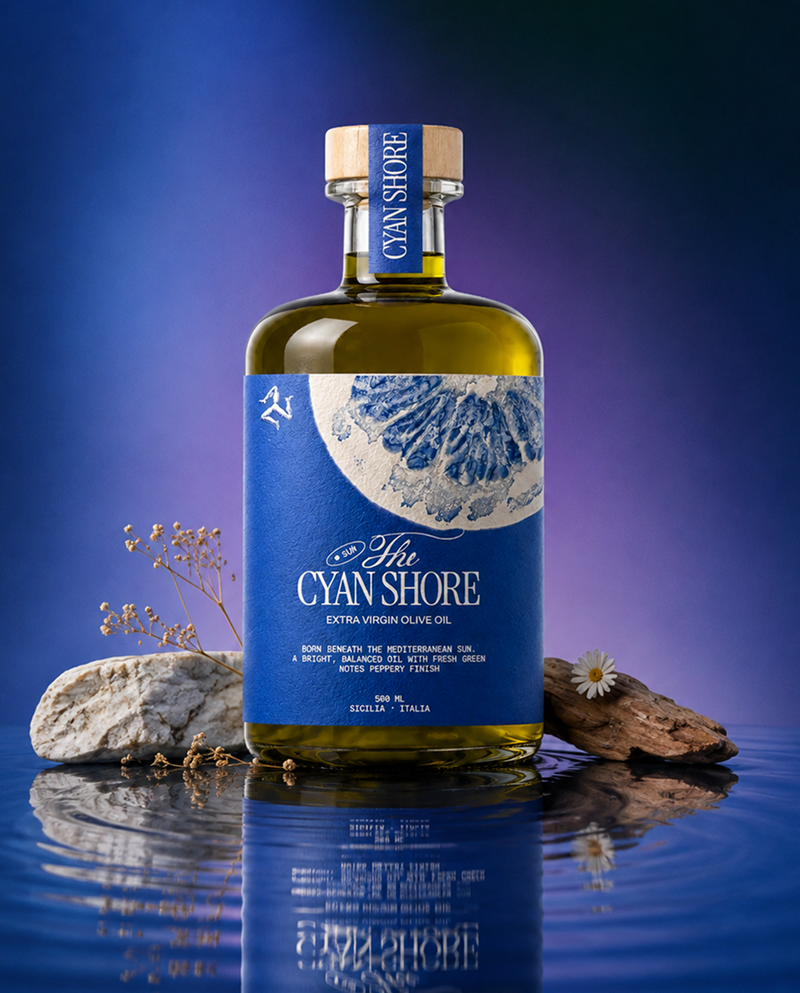
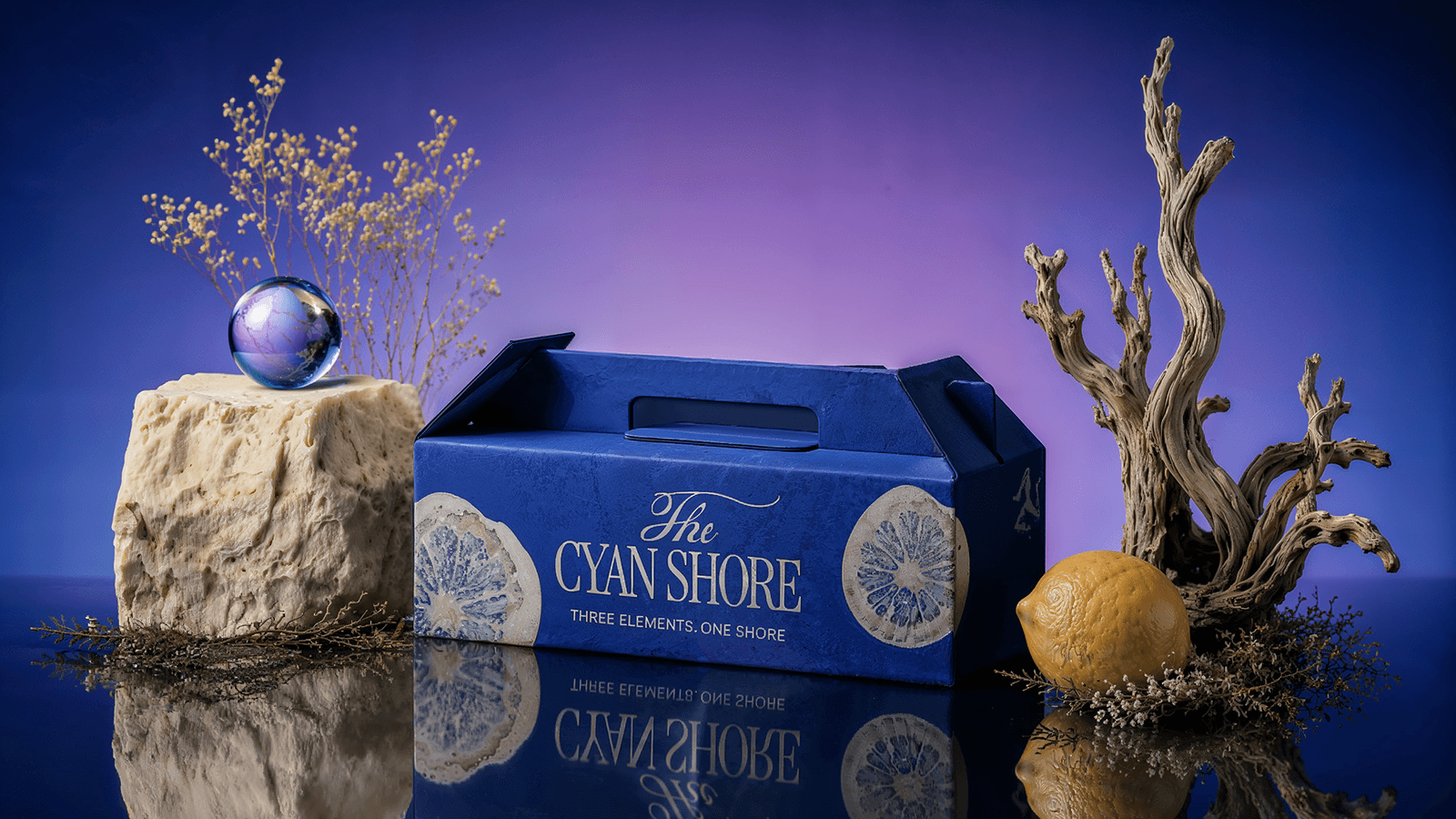
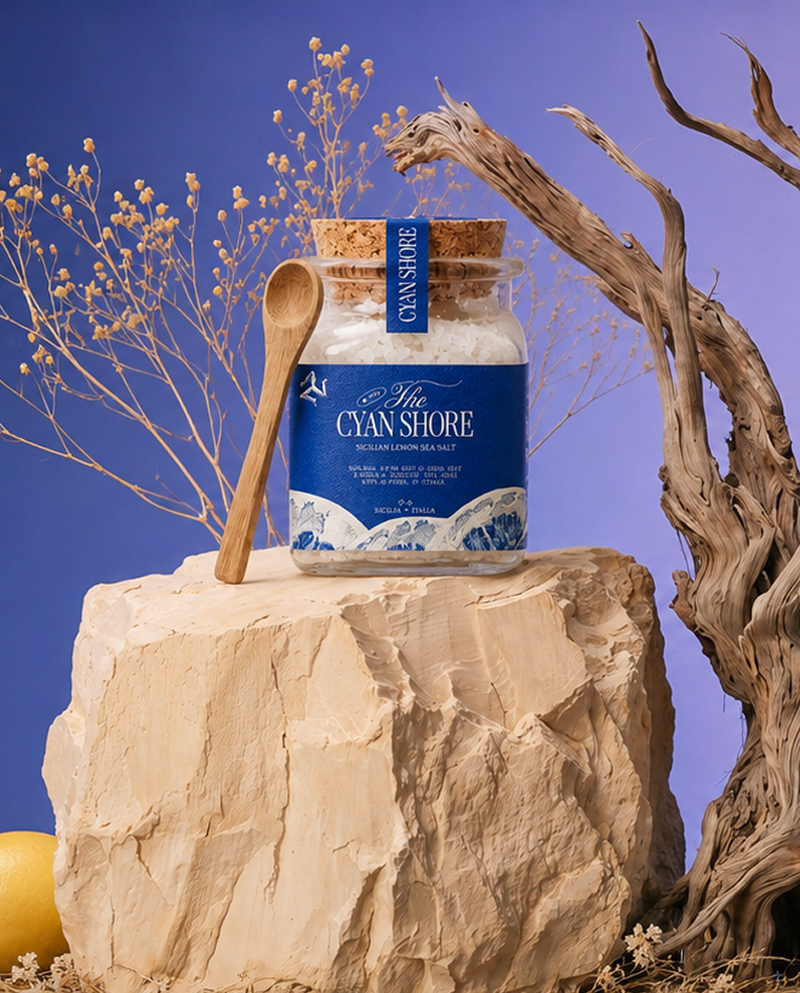
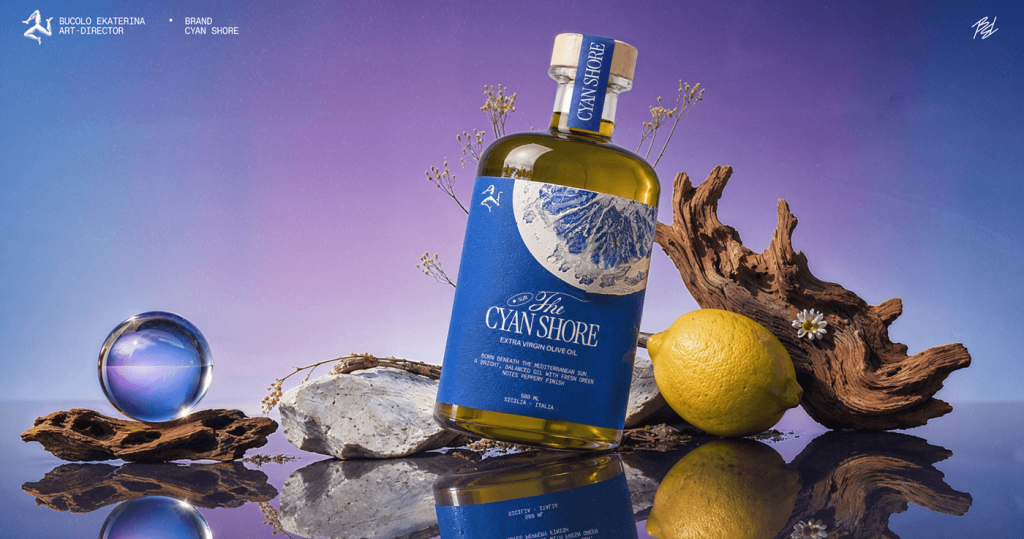
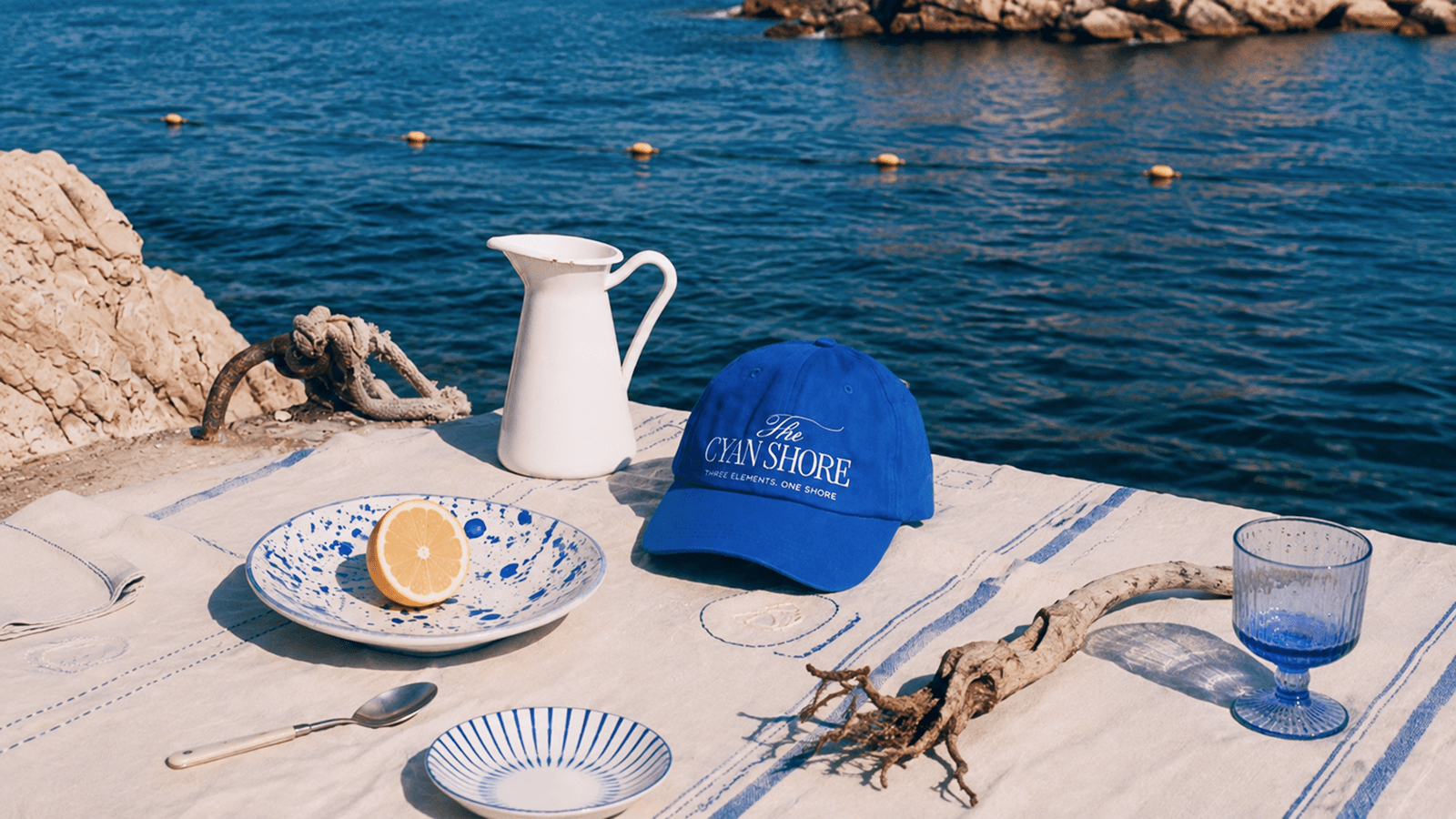
CYAN SHORE is built on three products and one process. The Trinacria — Sicily’s ancient triskelion, three legs radiating from a single head — gave us the geometry. Cyanotype, one of the oldest photographic techniques, gave us the material.

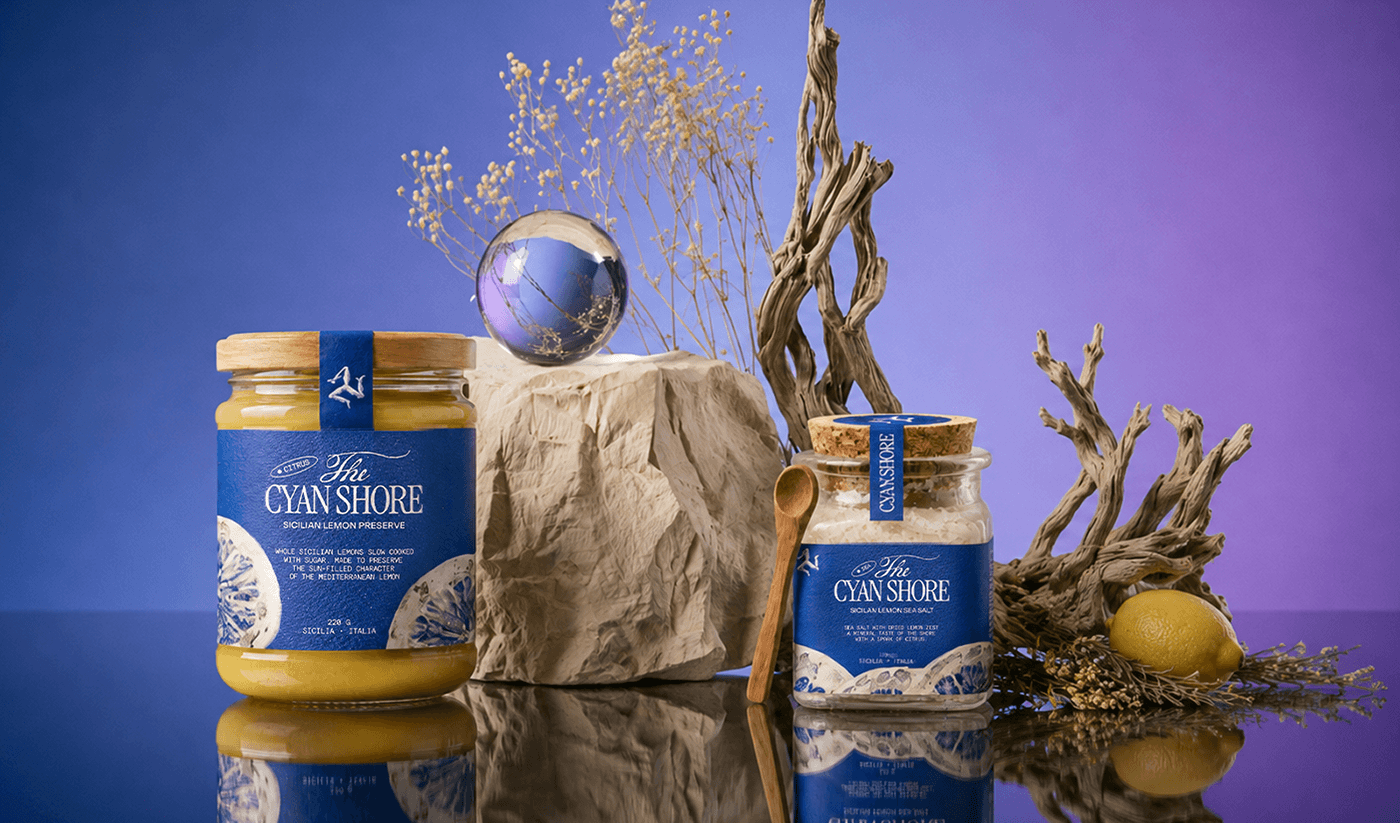
The lemon print is the clearest proof of the method: it isn’t drawn or traced. A whole lemon slice was laid on treated paper and left under UV light until everything around it turned deep blue, leaving only the shape the fruit blocked from the light. What you see on the jam label is that exact print, unedited.
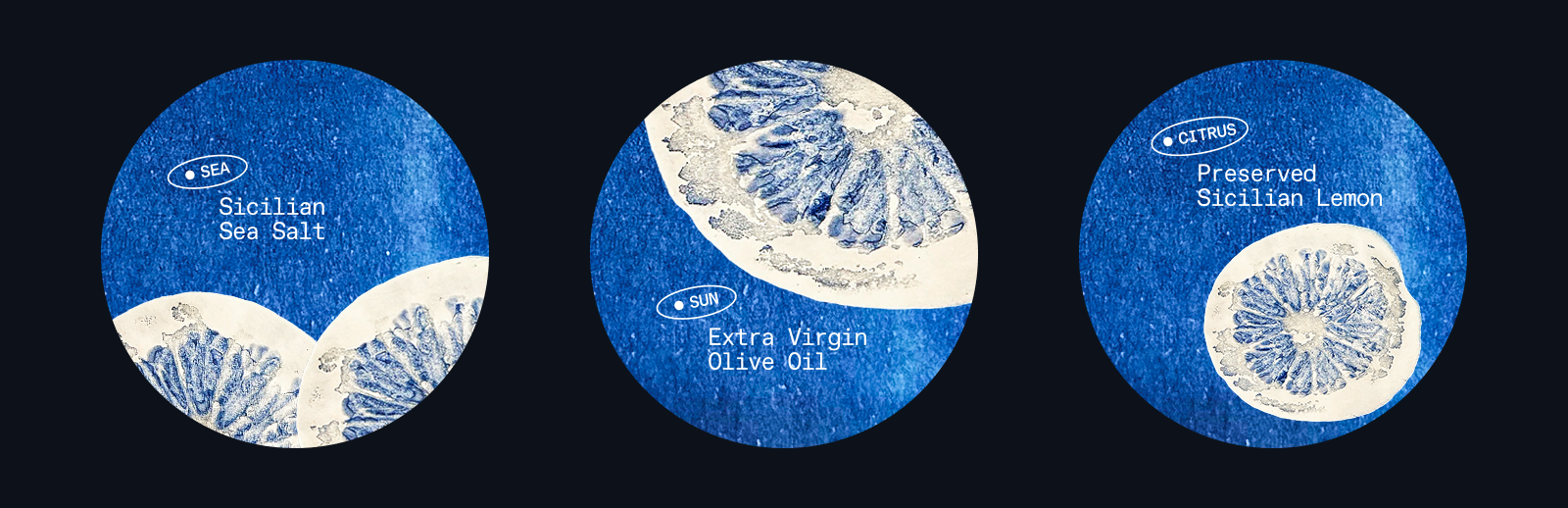
Once we had one true print, the rest of the system followed on its own. Olive oil, sea salt, and lemon jam didn’t need three separate visual languages — they needed three different crops of the same original image.

One print, three readings. For the oil, we kept the center — the dense radial lines where the pulp was pressed against the paper, close to where the fruit’s own rays begin.

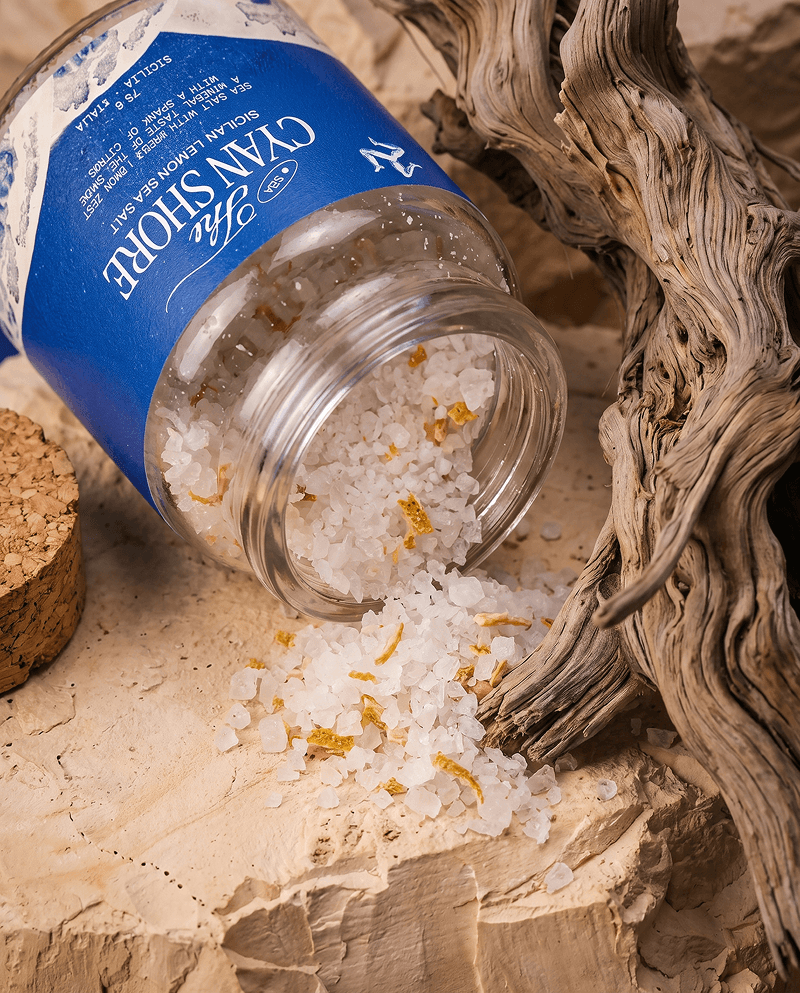
For the salt, we kept the opposite: the outer edge, where the exposure fades into an uneven, coast-like line. Nothing here was redrawn to look like a coastline. It already did.That’s the part of the project we spent the most time on — not designing a pattern, but deciding which fragment of a real print earns the right to represent each product.
 

CYAN SHORE, olive oil packaging design by Semenova Ekaterina, Italy. Image 1 of 8.CYAN SHORE, olive oil packaging design by Semenova Ekaterina, Italy. Image 2 of 8.CYAN SHORE, olive oil packaging design by Semenova Ekaterina, Italy. Image 3 of 8.CYAN SHORE, olive oil packaging design by Semenova Ekaterina, Italy. Image 4 of 8.CYAN SHORE, olive oil packaging design by Semenova Ekaterina, Italy. Image 5 of 8.CYAN SHORE, olive oil packaging design by Semenova Ekaterina, Italy. Image 6 of 8.CYAN SHORE, olive oil packaging design by Semenova Ekaterina, Italy. Image 7 of 8.CYAN SHORE, olive oil packaging design by Semenova Ekaterina, Italy. Image 8 of 8.

Comments

1 comment