Viola Amarantina
ABOUT
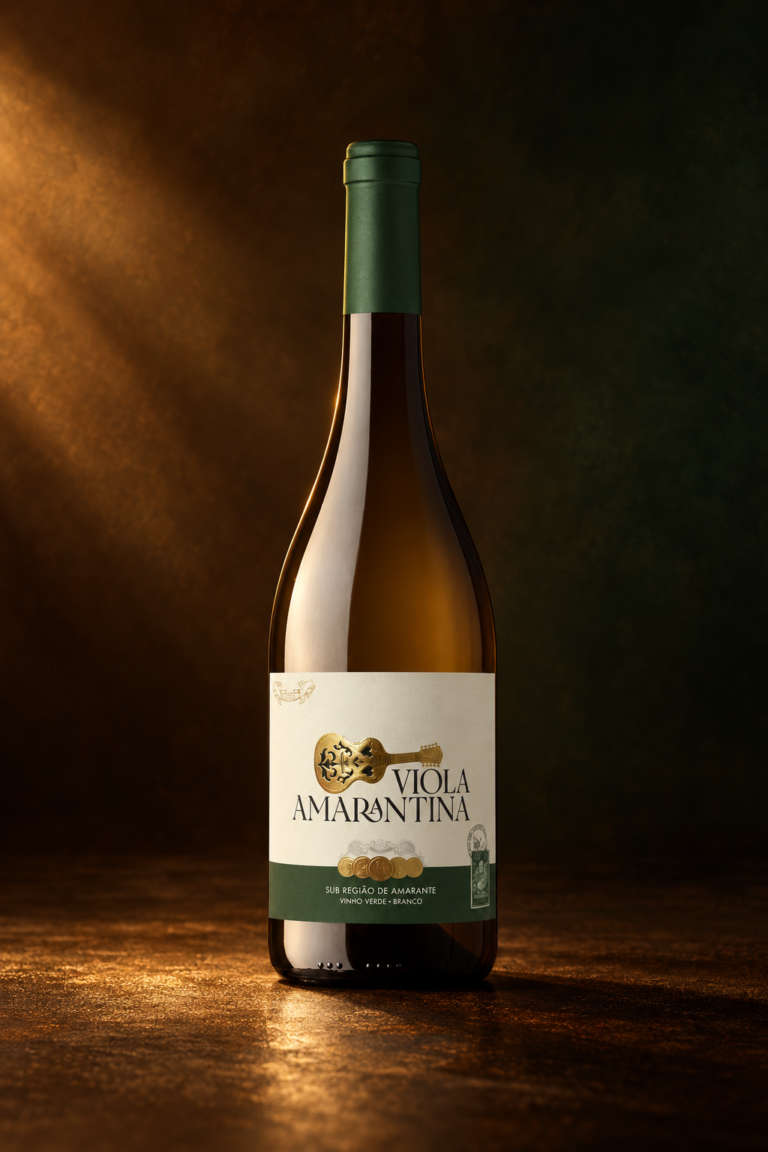
Viola Amarantina is a Vinho Verde Branco from the subregion of Amarante, Portugal. The project brings together the wine’s regional identity and the cultural tradition of the viola amarantina in a refined packaging system for the bottle and its presentation box.
CONCEPT
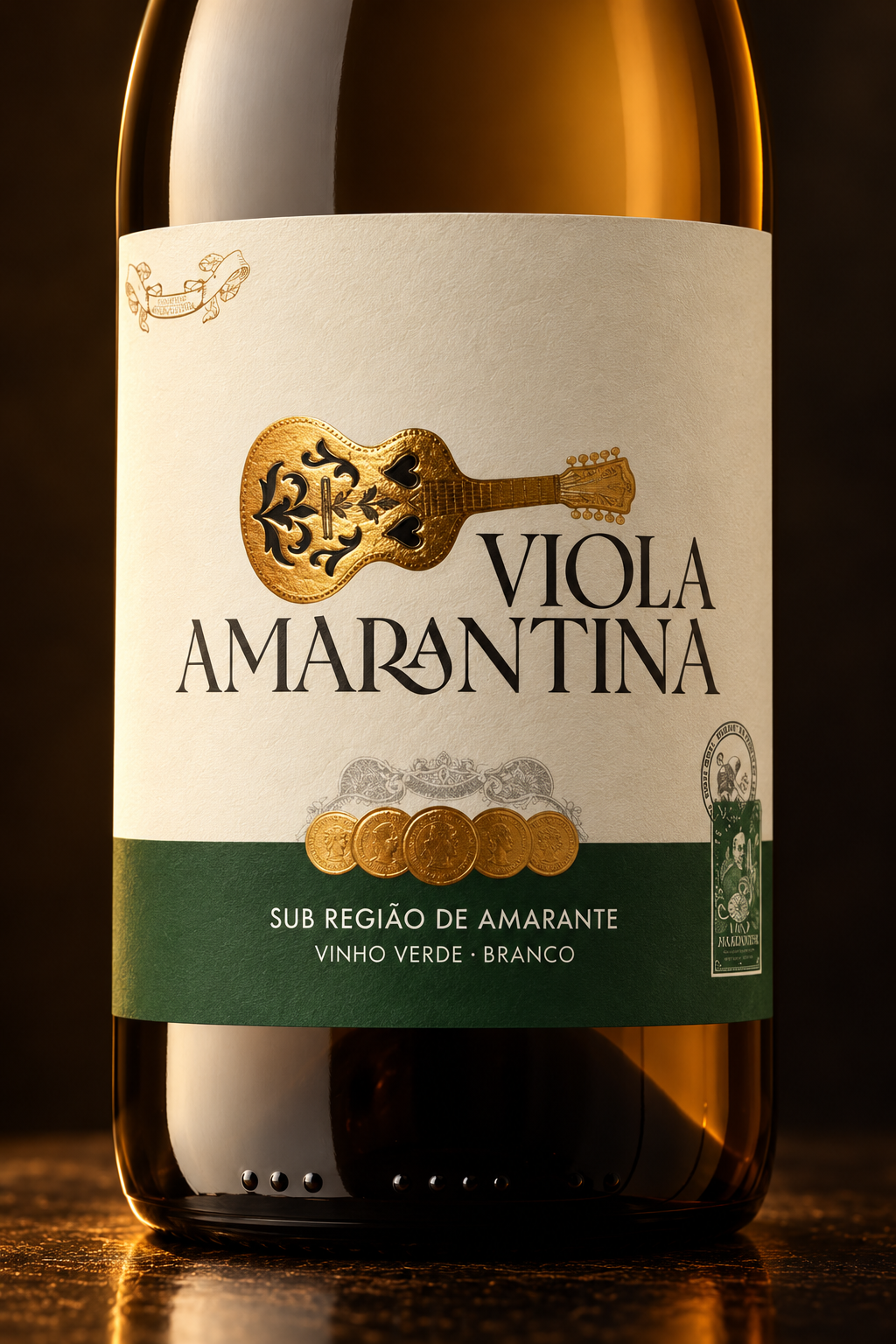
The concept takes its cue from the viola amarantina, a traditional Portuguese string instrument closely associated with the region. Its distinctive shape becomes the central emblem on the bottle label, linking the wine to Amarante through music and cultural heritage.
The design treats this connection with a contemporary, premium sensibility. Rather than relying on familiar vineyard imagery, it uses the instrument, musical notation and ornamental details to give the brand its own visual language.
SOLUTION
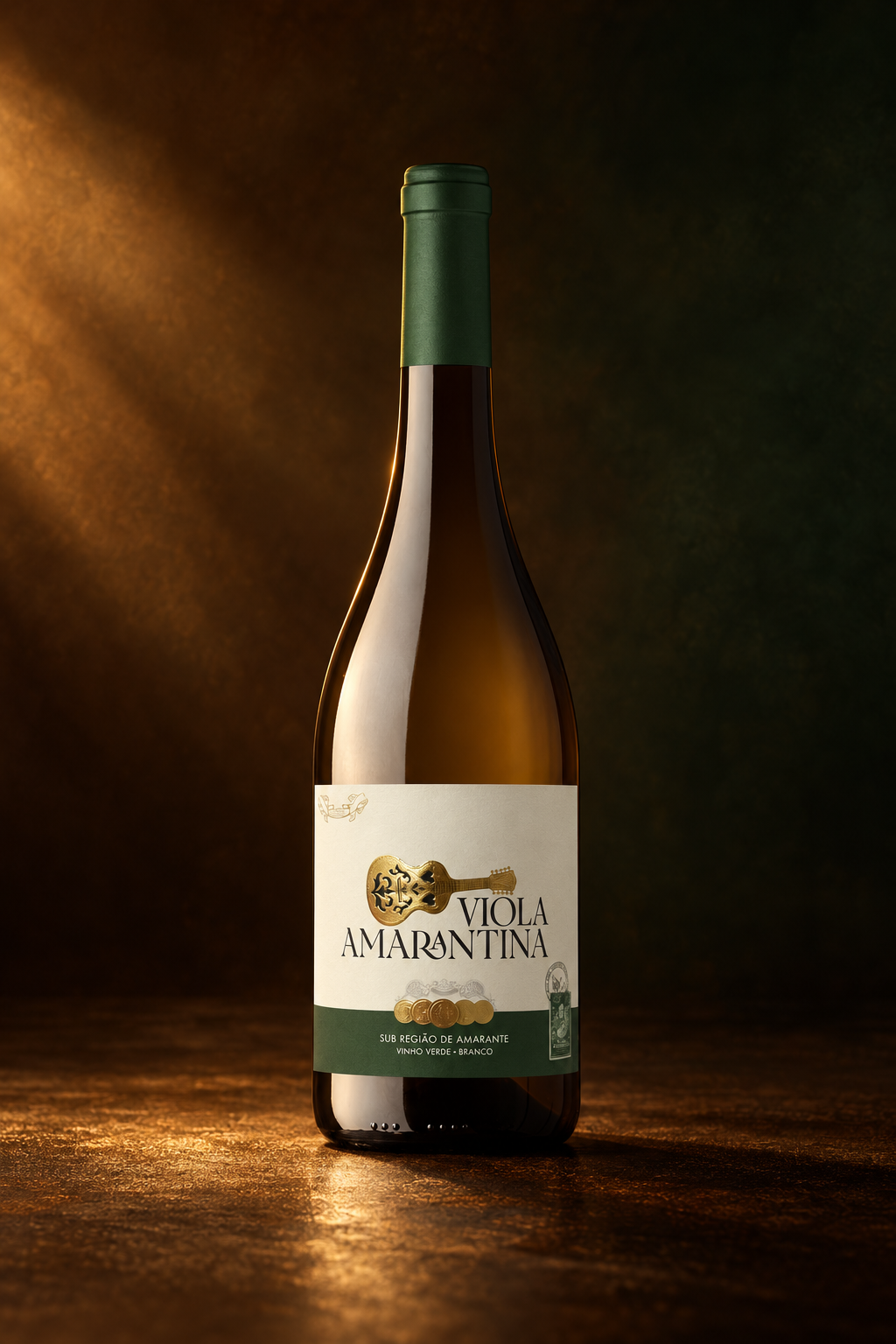
The bottle label pairs a warm ivory ground with deep green and gold accents. The instrument emblem anchors the composition, while the brand name, “Viola Amarantina,” remains clear and prominent. A dark green band identifies the wine as Vinho Verde Branco from the subregion of Amarante.
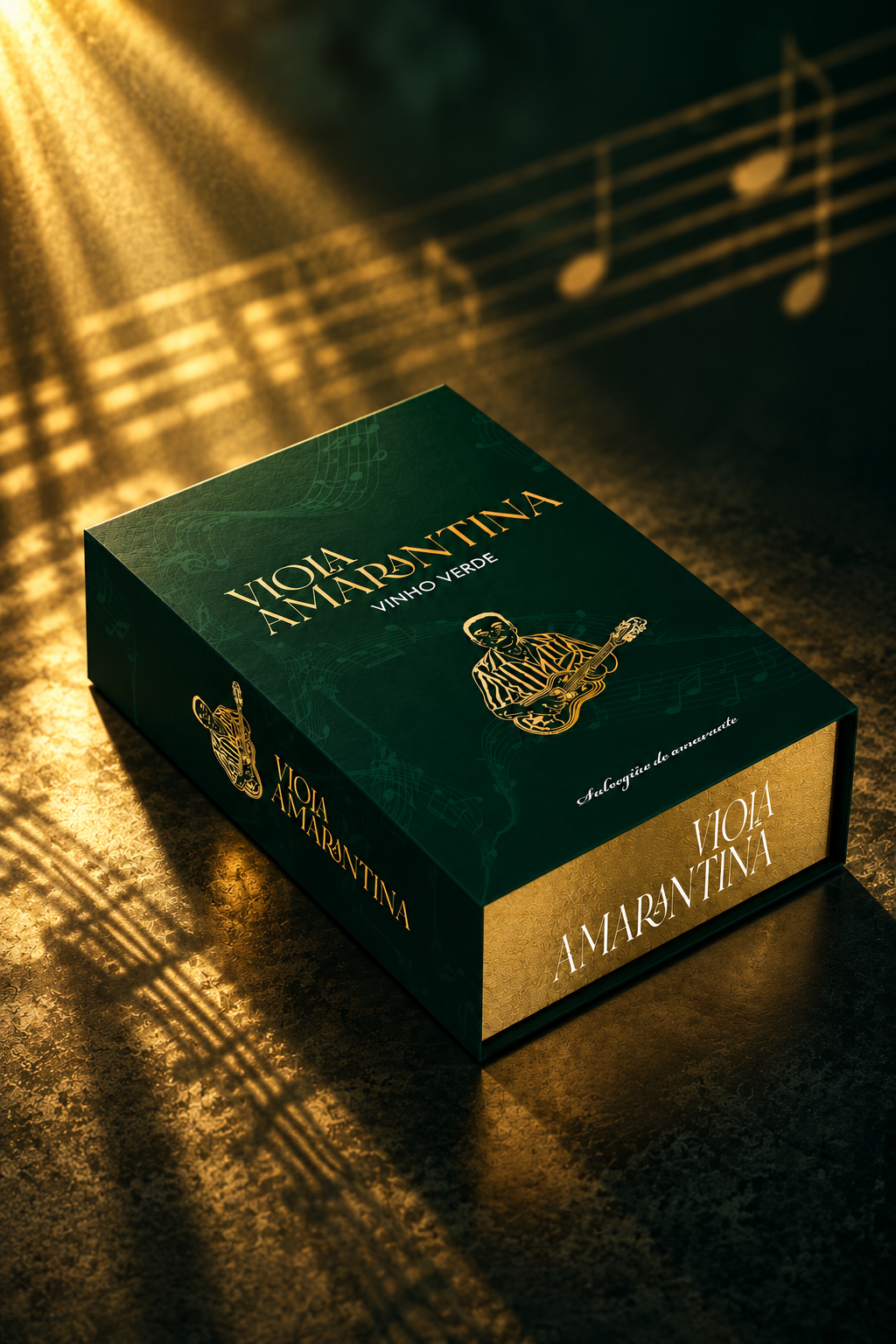
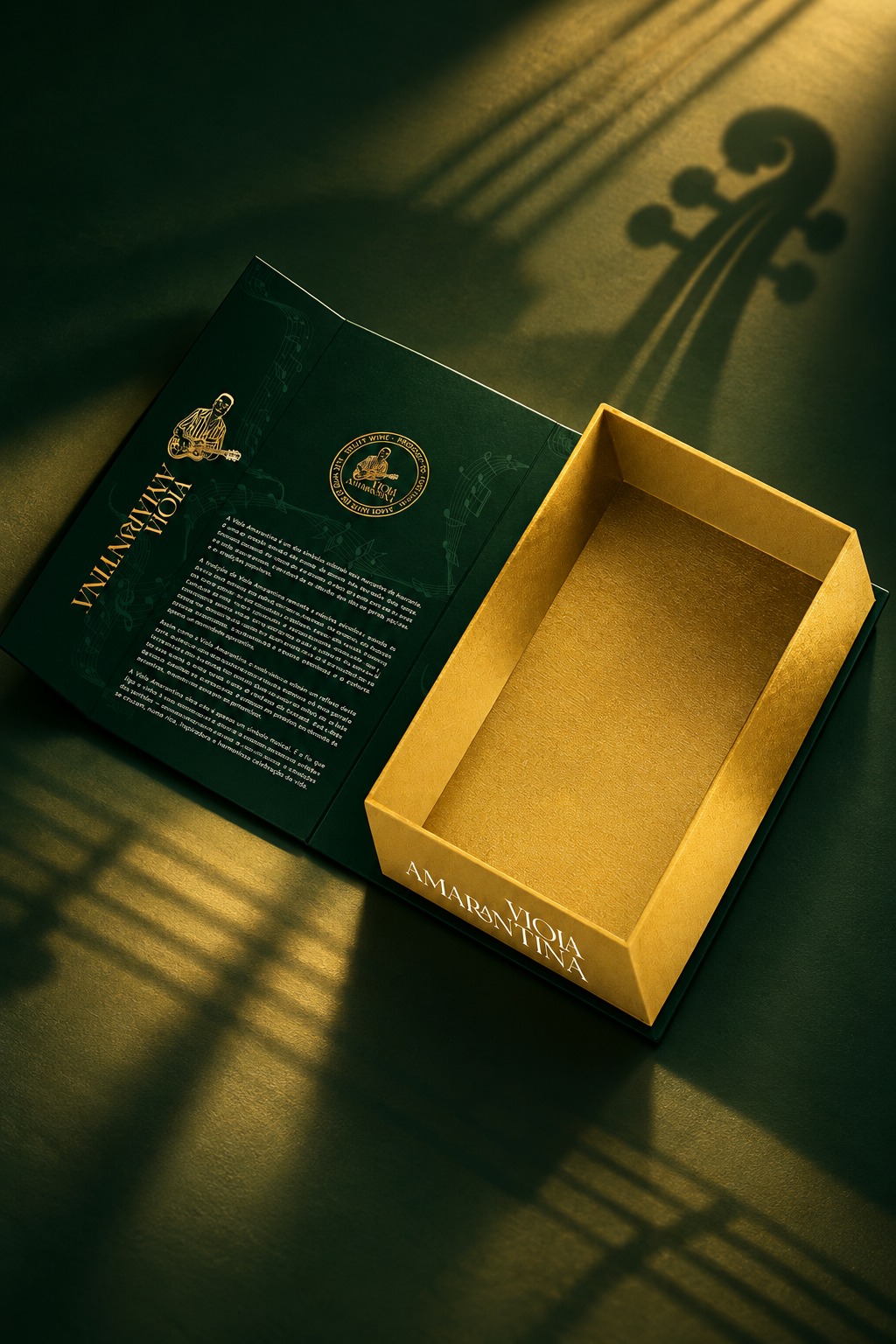
The gift box extends the same identity across a larger surface. Deep green panels, gold lettering and musical motifs create a coherent presentation that feels connected to the bottle while giving the packaging a distinctive presence of its own.
TECHNIQUE
The packaging combines carefully arranged typography, an illustrative instrument motif and a restrained palette of ivory, forest green and gold. The visual system is carried across the bottle label and gift box to create a unified brand presentation.
WHAT MAKES IT UNIQUE
The viola amarantina is more than a decorative reference: it is the project’s defining symbol. By placing a regional instrument at the heart of the identity, the packaging connects the wine to Amarante’s cultural character in a way that feels specific to this place and product.
RESULT
Viola Amarantina presents Vinho Verde Branco through a visual identity shaped by regional culture and musical heritage. The coordinated bottle and gift box combine a strong sense of origin with an elegant, memorable expression.


Comments
0 commentsLog in to comment or submit projects