

MITTEA
London and India have always shared one obsession: tea. But while London built an entire culture around the cup, India built one around the ritual, and at the centre of that ritual sits the Kulhad, a handthrown terracotta cup used across the subcontinent for centuries. It isn’t just a vessel. It’s the tea-hawker pressing it into your hands on a crowded train platform, the roadside stall at dawn, the warmth of fired clay against your palms on a winter morning. It’s biodegradable by design and ceremonial by nature, and most people in London have never heard of it.
MITTEA was built to change that. A London-based beverage brand rooted in the glocalisation of the Kulhad, it was designed to bring Indian tea rituals into the urban fabric of a city that already loves tea but doesn’t yet know this version. The challenge wasn’t simply aesthetic; it meant resolving three genuine tensions at once: heritage vs. modernity, local vs. global, and tactile vs. digital.
Mittea, a play on Mitti, the Devanagari word for soil, embedded the brand’s cultural origin into its very language. If the name carried the tradition, the design could carry the modernity.
The visual identity combines minimalist and maximalist elements, with warm terracotta tones and bold graphic contrast. Clean, sharp structure gives the brand its contemporary urban legibility, while rich cultural texture gives it its soul. The two don’t compete; they’re the whole point. This is what it looks like when something ancient is designed to hold its own on a London high street.
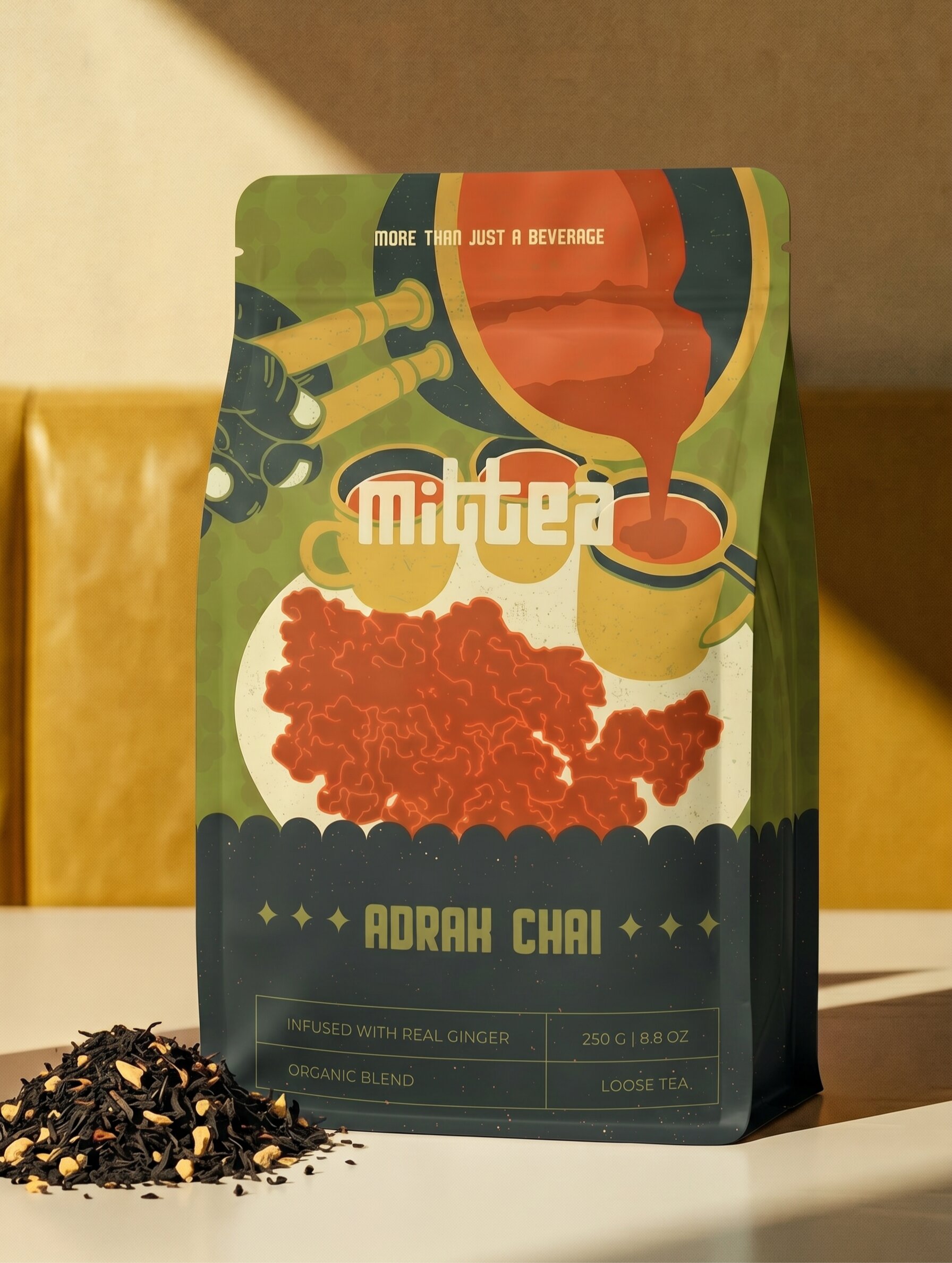
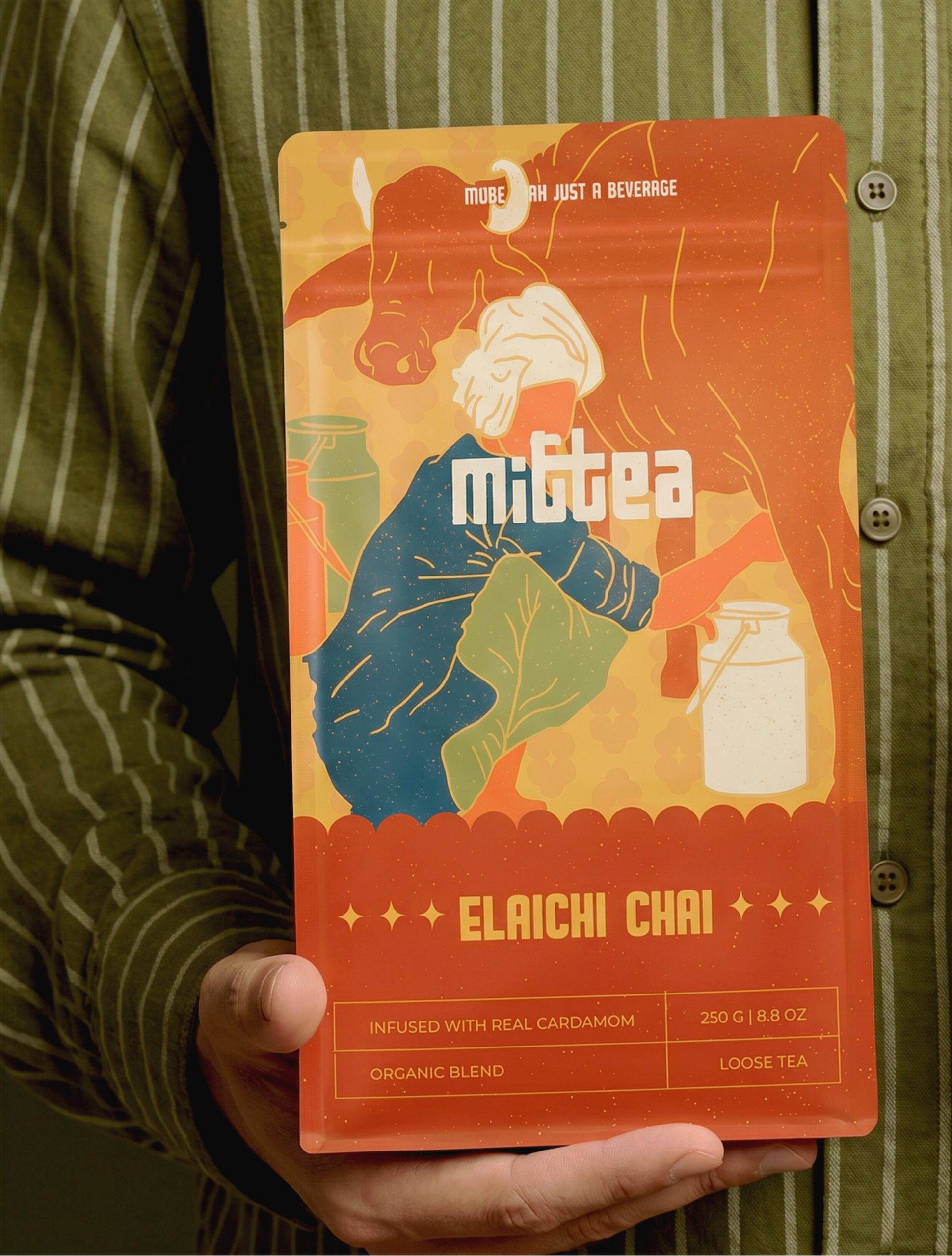
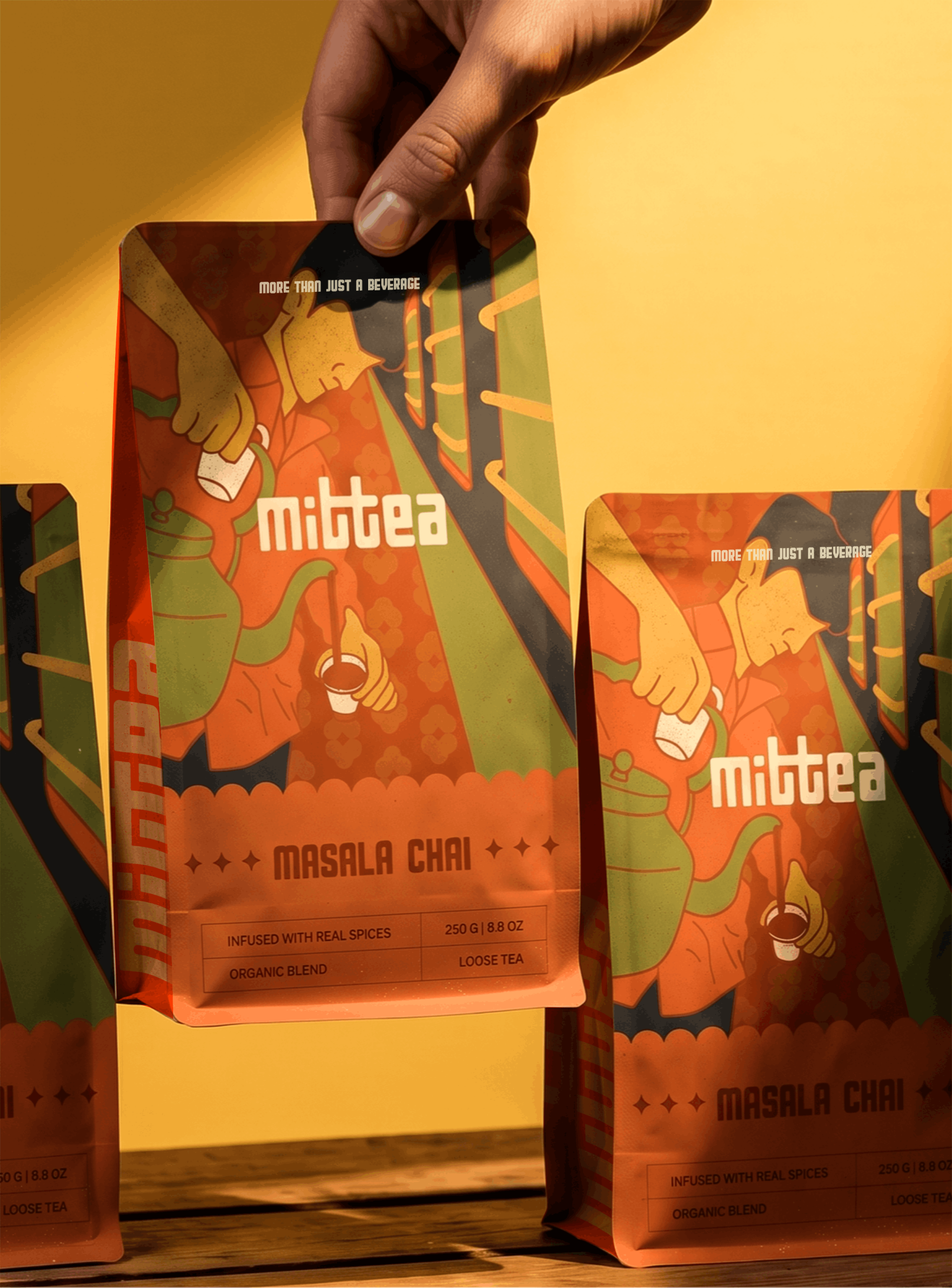
That tension extended into the packaging, the wholesale tea pouches, where illustration became the bridge between two worlds. Each piece across the range depicts a different scene of Indian tea culture: a chai stall, a train platform, a morning ritual, a festival gathering. Rendered in a visual language that feels both nostalgic and graphic, the illustrations don’t just decorate the packaging; they give a London audience a window into a ritual they’re only just discovering, turning every cup into a small act of cultural storytelling, all while introducing them to the wide range of teas consumed in India as well.
Glocalisation isn’t about softening a tradition until it fits somewhere new. It’s about trusting that if you present it with enough conviction, the world will meet it halfway. MITTEA doesn’t ask London to understand the Kulhad. It makes London want to.
(This is a conceptual project) Branding | Packaging


 lunapanda
 Tridimage
 Analoguecreative
 lettera7
 alchimistestudioParis
 Lana B
 Colossal
 Pivot Studio
 M&A CREATIVE AGENCY
 monther al omari
 Anastasia Cherepanova | xtramez
 Hollóka Grafikai Műhely / Graphic Design Studio
 BOLD branding
 Antonia Skaraki
 Pâmella Lorrany
 Z9BKAdsgn
 Francesco Paternoster
 b1studio.ro
 Chris Creative Works
 Boordon
 Dmitriy Kuzovlev
 Brand Society
 yasharpic