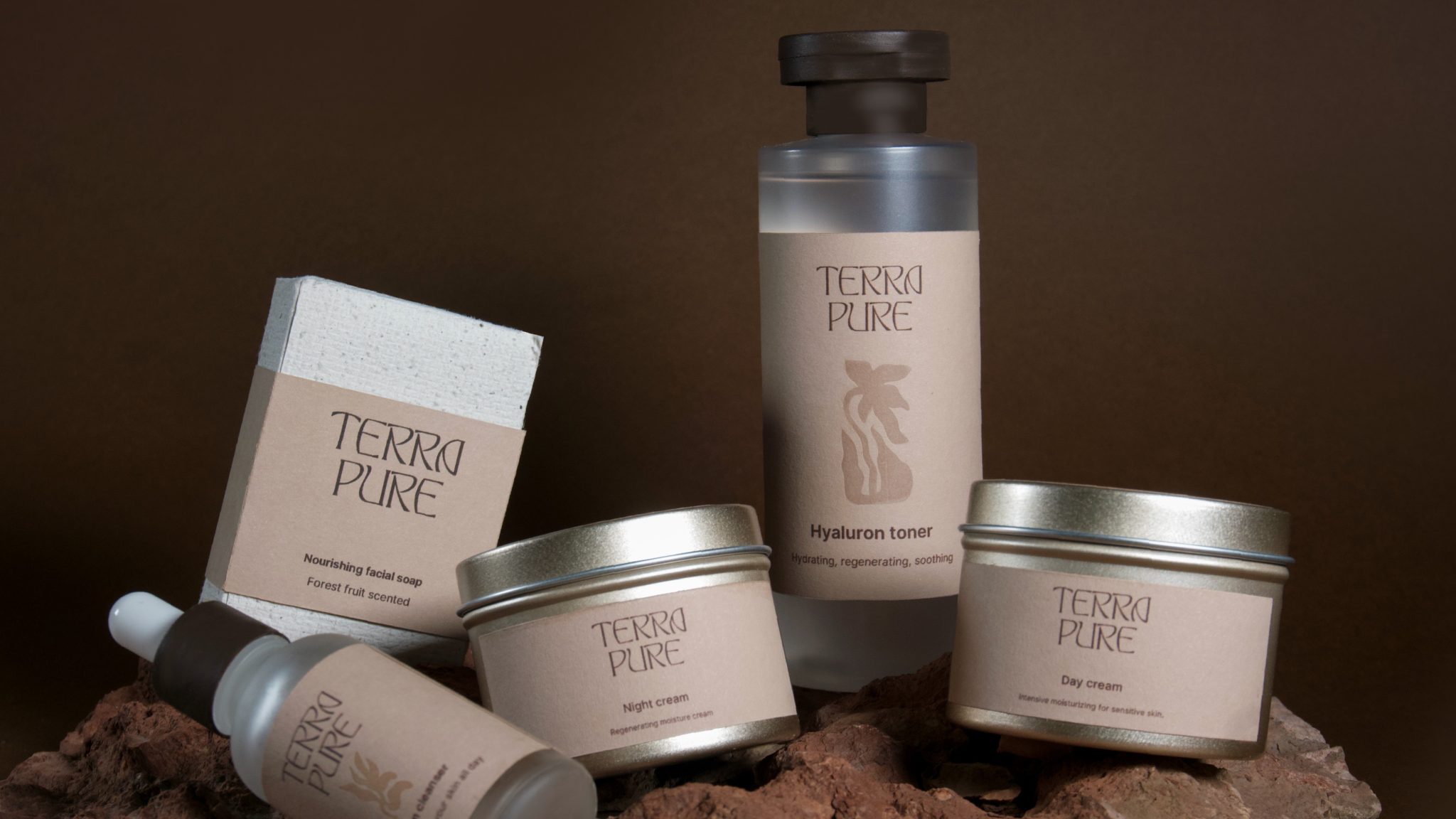

At the heart of Terrapure is the belief that sustainability should never compromise aesthetics, quality, or user experience. The project was developed as my bachelor’s thesis in graphic design and explores how cosmetic packaging can become part of a circular, zero-waste lifestyle while maintaining a refined premium identity.
Terrapure is a conceptual cosmetics brand created for environmentally conscious consumers who seek thoughtful alternatives to conventional beauty products. Instead of treating sustainability as an additional feature, it became the foundation of every design decision—from the choice of materials and structural solutions to the visual identity and production techniques.
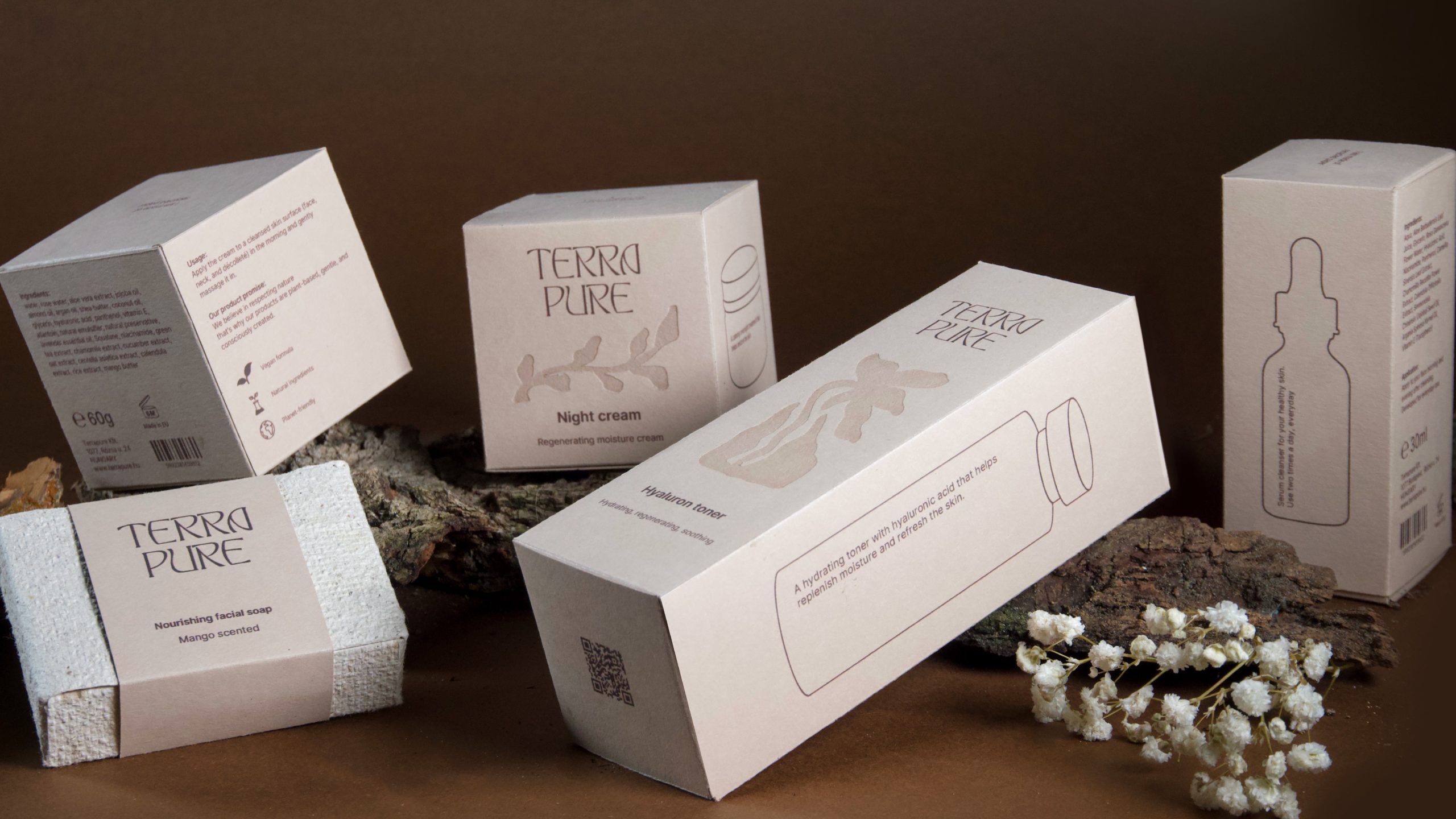
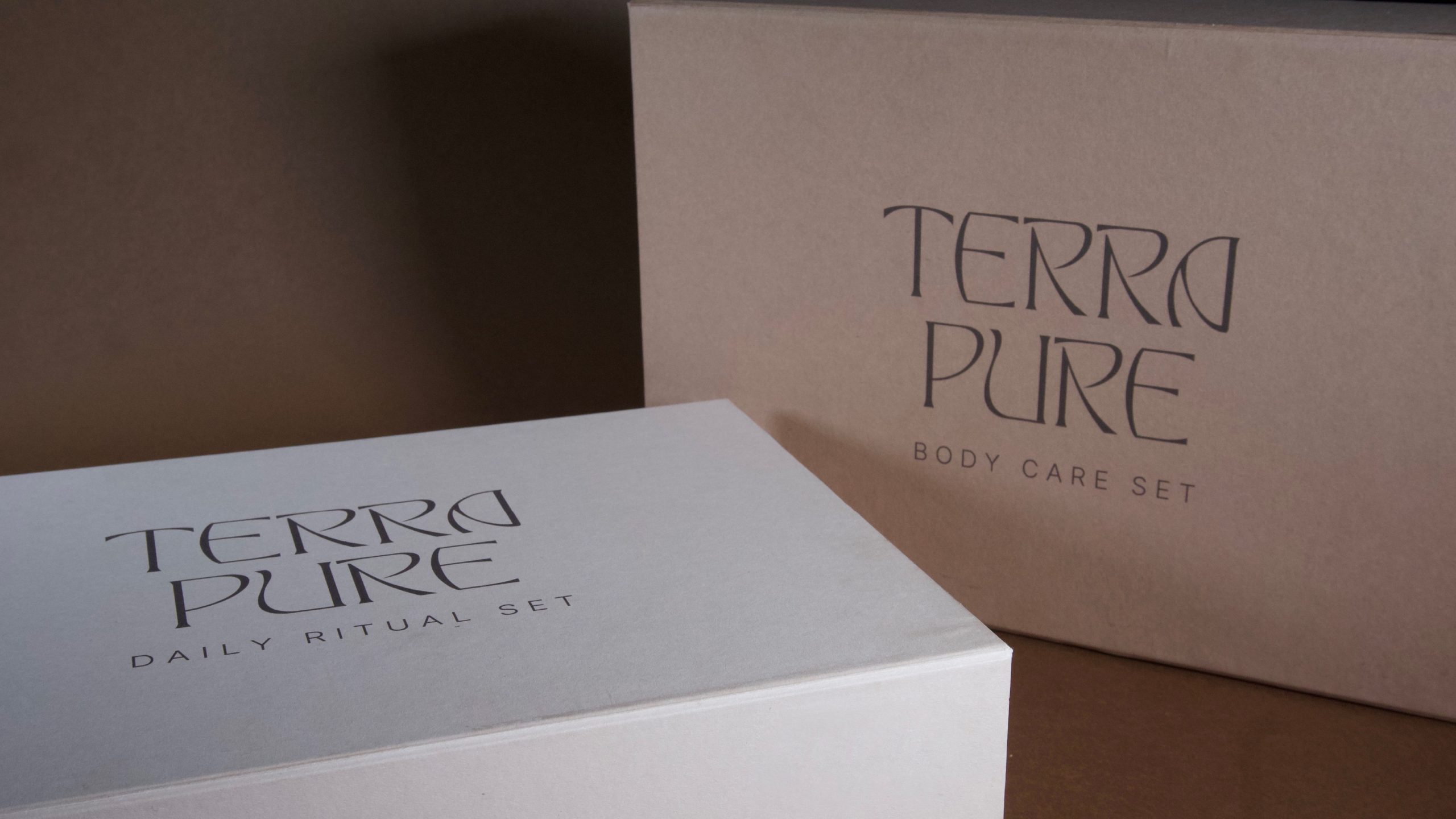
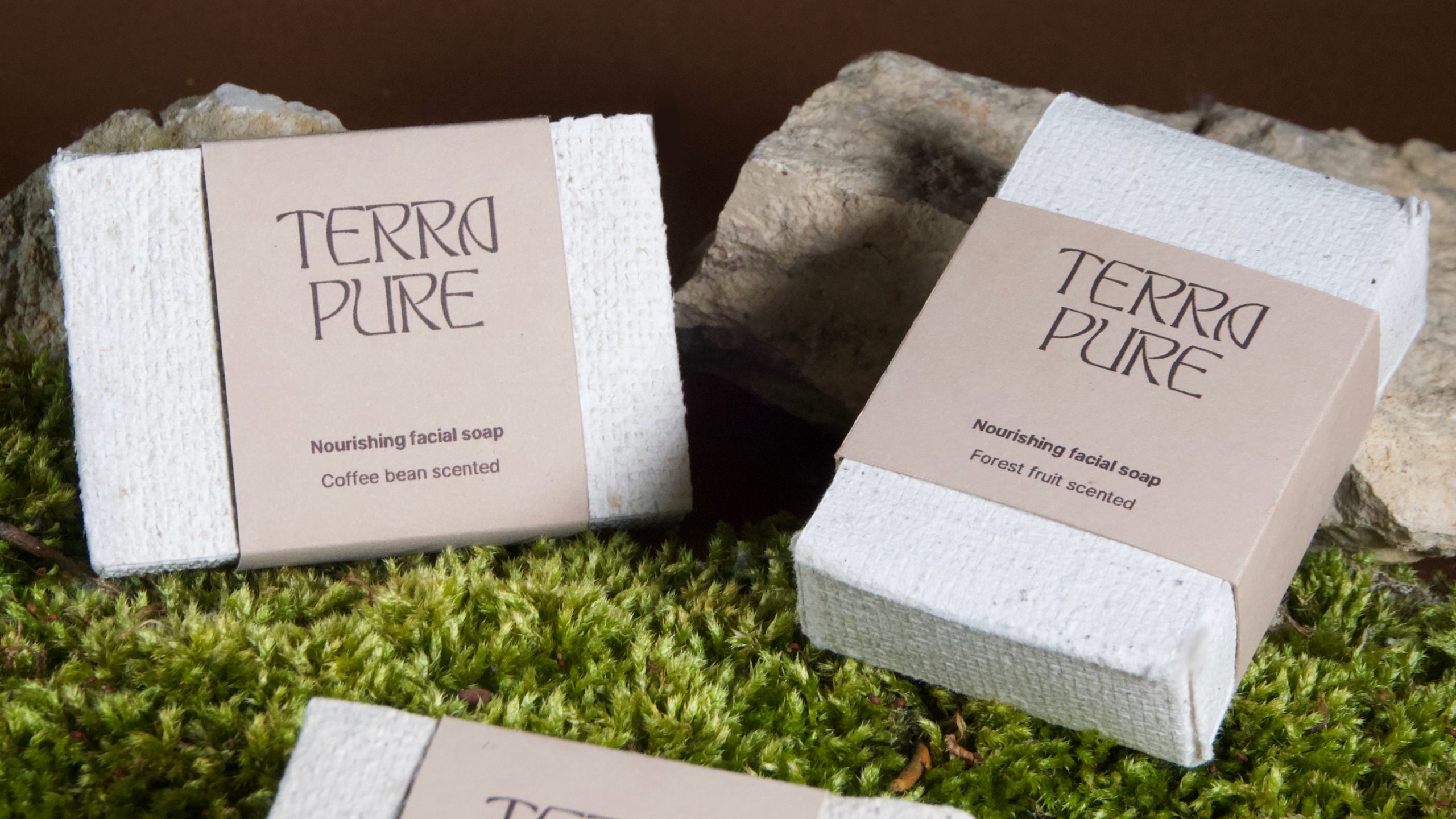
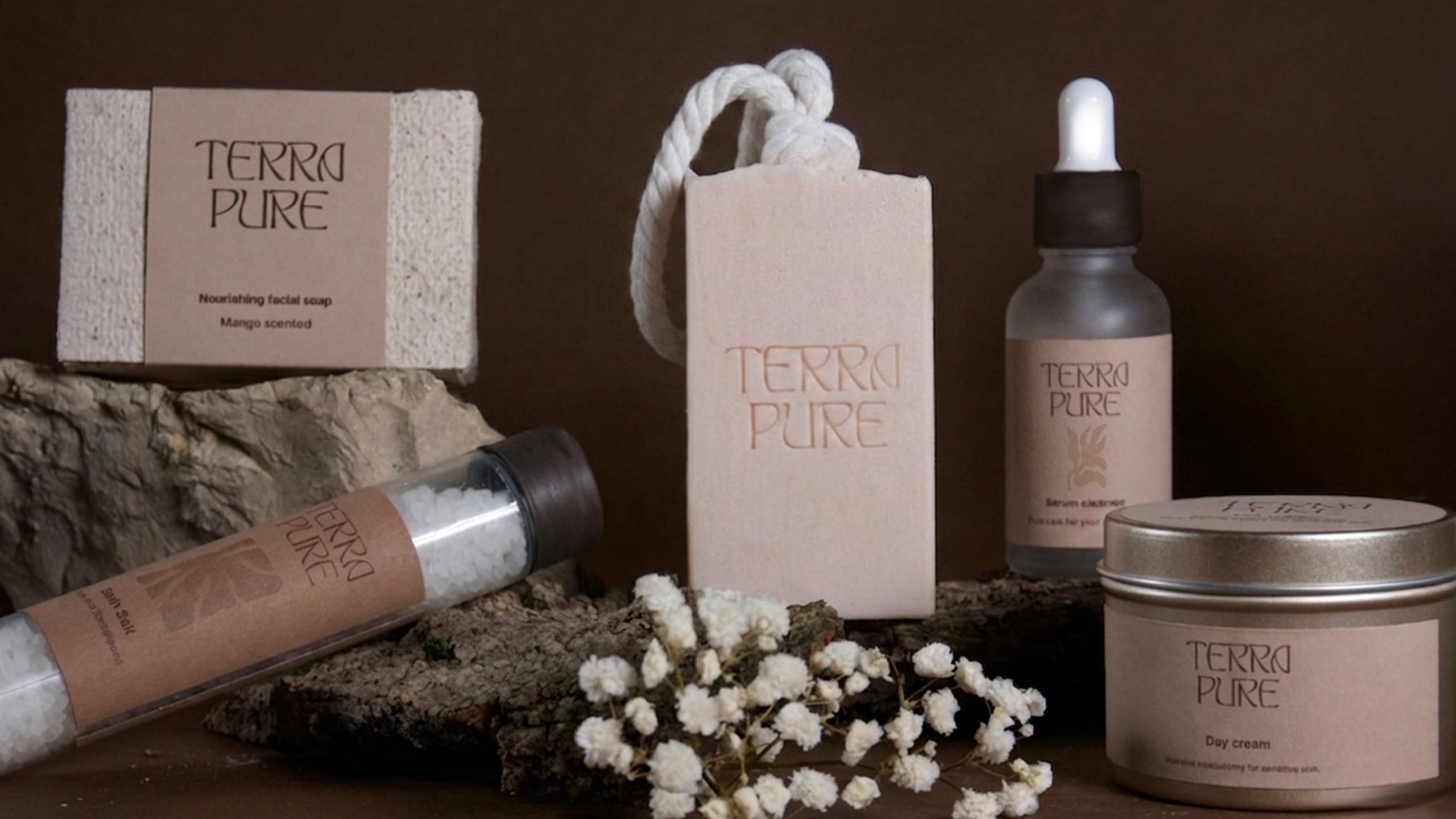
The packaging system combines paper, recyclable metal, and bioplastic to achieve the best balance between functionality, durability, and environmental impact. Refillable metal containers are designed for long-term use, while paper components are produced from eco-friendly materials and bioplastics provide lightweight, practical solutions where water resistance is required. Every material was selected for its recyclability, longevity, or reduced environmental footprint.
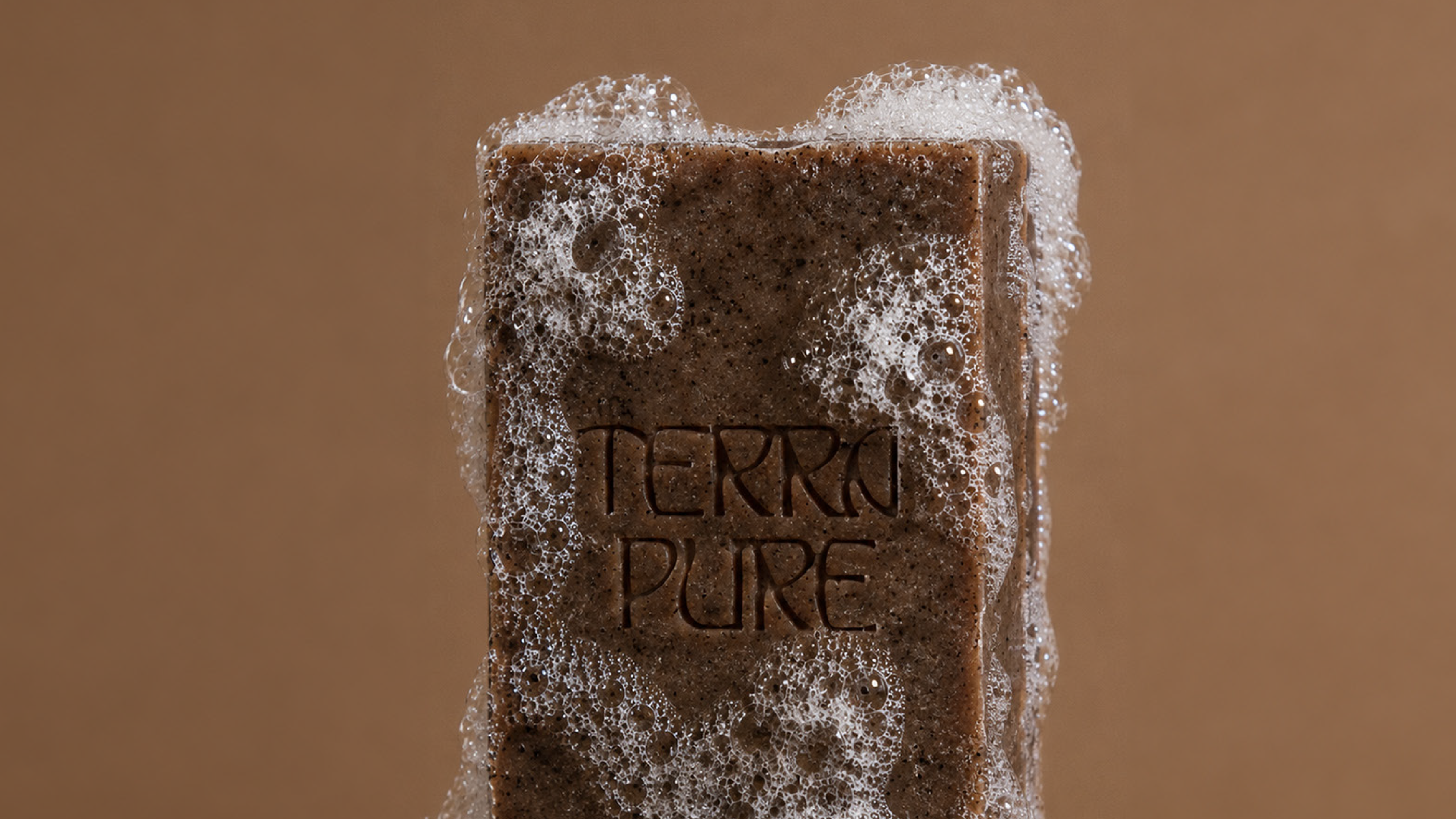
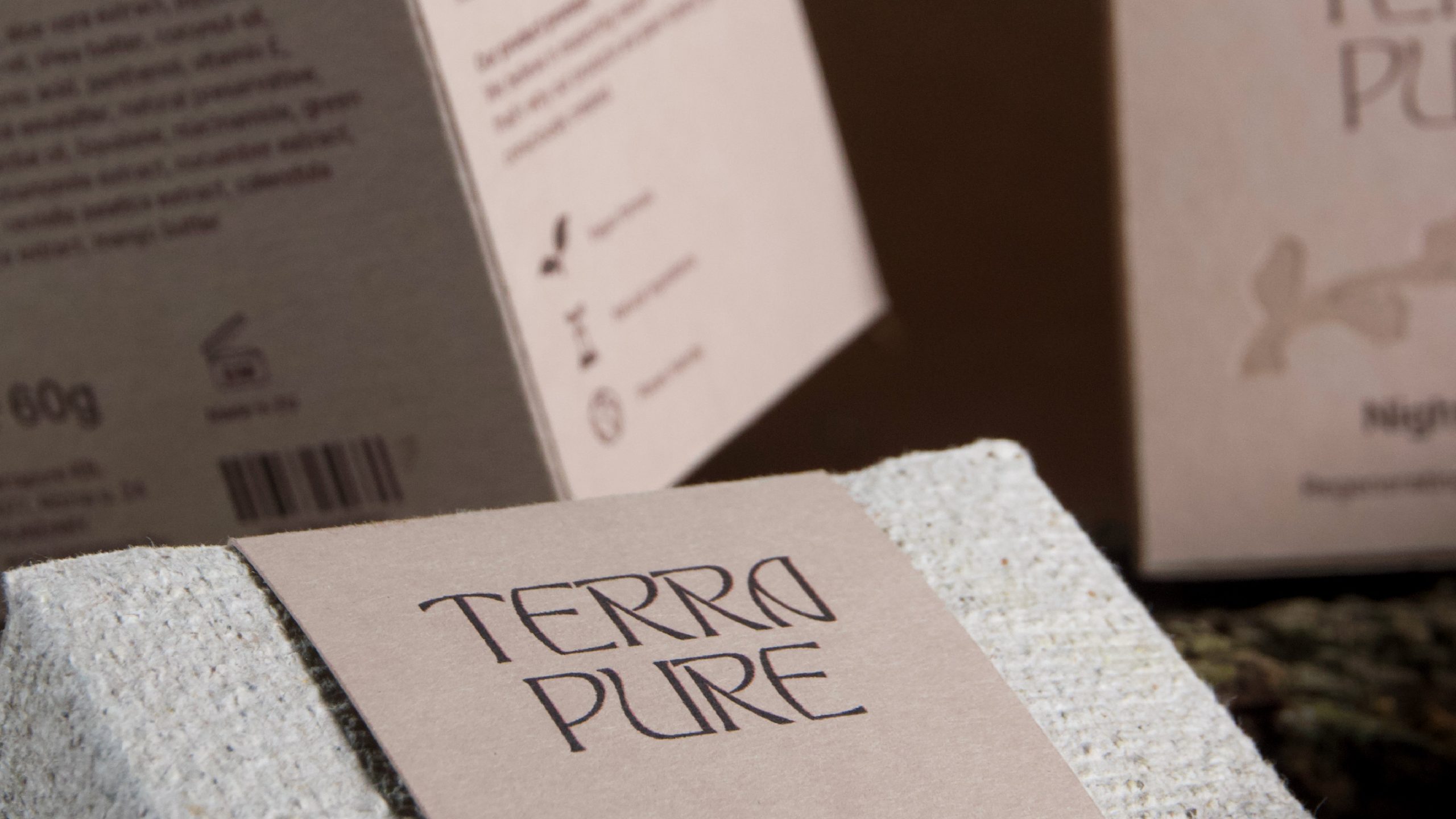
The visual identity draws inspiration from the repetitive organic patterns found in nature, particularly the soft ripples formed by waves on sand. These flowing forms are reflected in the custom logotype and throughout the packaging system, creating a calm, tactile, and timeless aesthetic that reinforces the brand’s connection to nature.
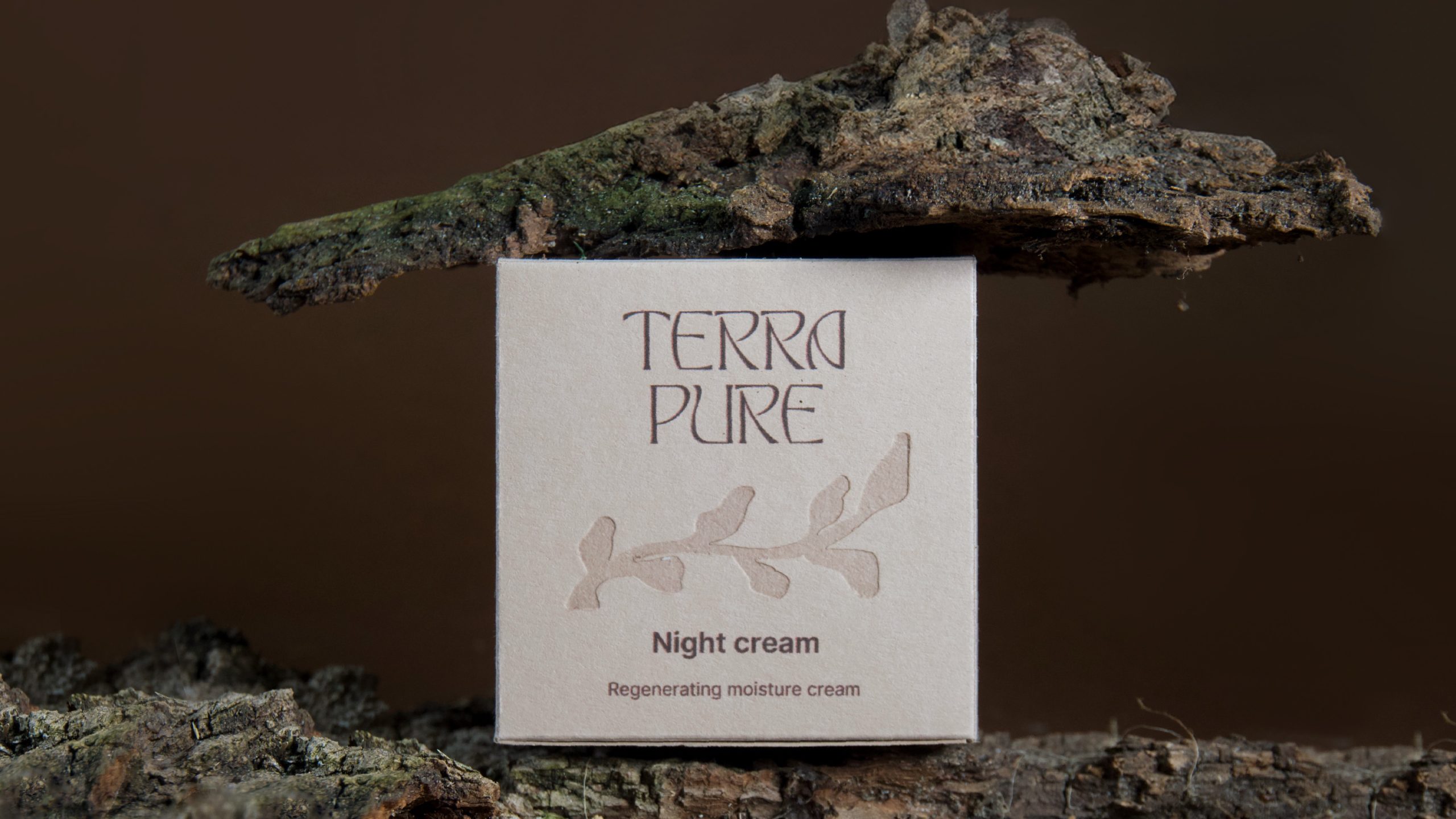
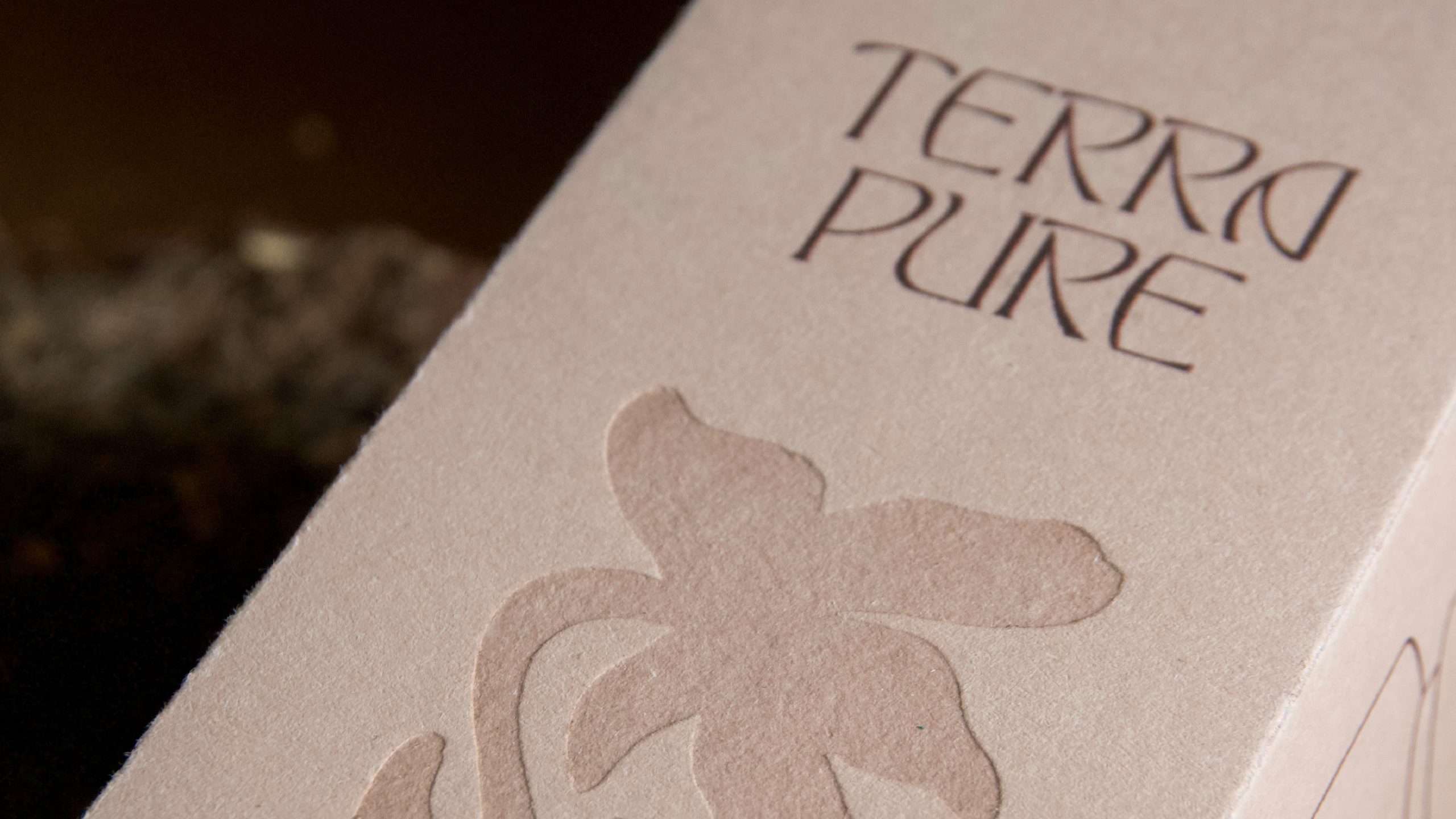
A defining feature of the packaging is the use of blind embossing instead of additional inks or decorative finishes. Each product features a unique botanical illustration transformed into an embossed surface, creating a sensory experience through touch while reducing unnecessary printing layers. The result is a minimalist design language where texture becomes the primary visual element.
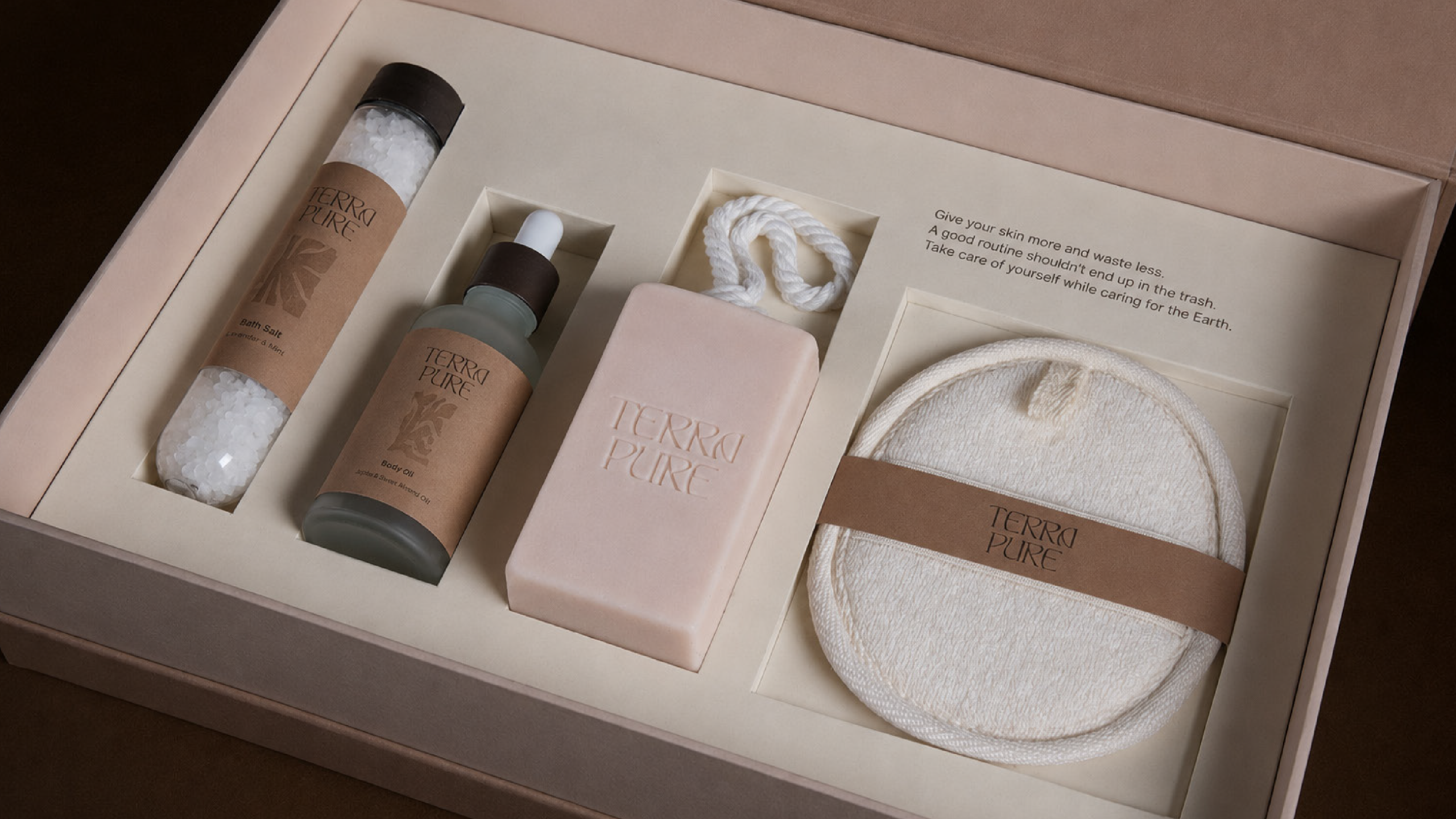
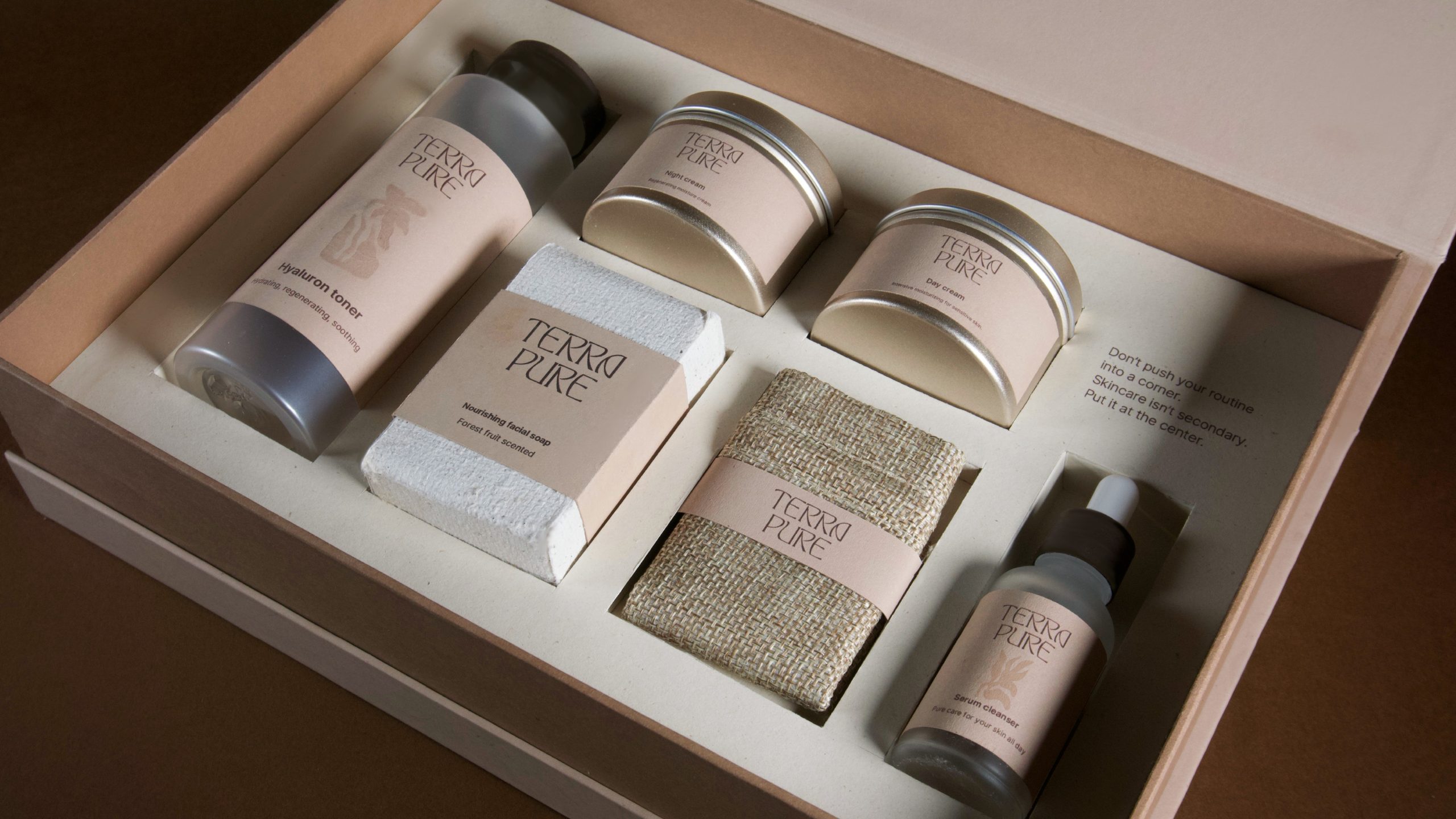
The product range includes solid facial cleansing bars formulated for different skin types, solid body cleansers, and starter kits that encourage consumers to adopt refillable products from the beginning. The entire collection was designed as a cohesive modular system that minimizes waste throughout the product lifecycle.
 alchimistestudioParis
 Estudio Argo
 Modern Theory
 monther al omari
 Ohmybrand
 Affogato Brand Design
 Tancybox
 waanrong
 nazystudio
 Daria Fox
 g.apolly
 sahildoesartt
 Stiandco
 BREAK DESIGN
 ShreyaDighe
 Sameh Elnahas
 Minim Brand Design
 Ebbi
 Shabouk Printing & Packaging (Shabouk Carton Boxes – شعبوق)
 Brandegree
 Abbydraw Designs Unique Conceptual Branding & Packaging Designing Ideas
 bilel tkouri
 NEV
 Stefano Bracci
 Alina