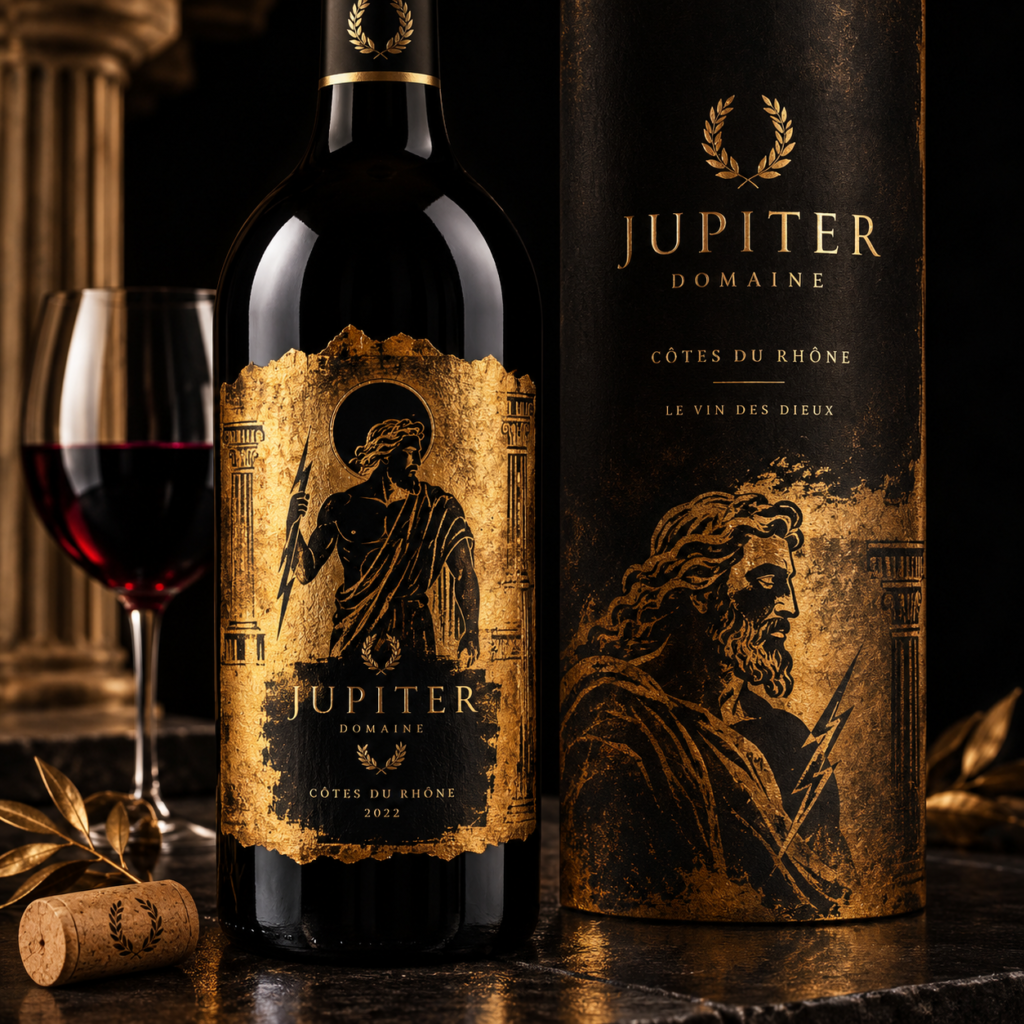

Jupiter, en latin Juppiter ou Iuppiter (génitif Jovis), est le dieu romain qui gouverne la terre et le ciel, ainsi que tous les êtres vivants s’y trouvant. Il est aussi le maître des autres dieux et est originellement un dieu du ciel, caractéristique que l’on retrouve dans son association aux présages célestes liés aux pratiques divinatoires des prêtres de Rome. Dieu souverain, il a pour attributs l’aigle et le Foudre. Les Romains finirent par associer le dieu Jupiter à son équivalent grec Zeus, même si les deux dieux se distinguent d’abord très nettement. Dans la tradition littéraire romaine, la représentation de Zeus se superpose à celle de Jupiter, au point que les deux dieux finissent par être confondus tant par les mythes que l’iconographie. C’est pour cela que Jupiter, jusqu’alors quasiment privé de mythologie ou de liens de parenté, se voit attribuer les caractéristiques mythologiques du dieu grec Zeus. Ainsi, Jupiter est marié à sa sœur, Junon. Étymologie Le nom « Jupiter » vient de l’évolution d’un nom composé d’origine indo-européenne *Dyēus ph2ter, signifiant « Ciel père », que l’on retrouve dans le grec Ζεύς πατήρ / zeús patếr et le védique Dyauṣ Pitā. La première partie du composé appartient à la famille formée sur *dyew, racine indo-européenne désignant « la lumière diurne », le « ciel lumineux »[1] et sur laquelle est également formé le mot latin dies, « le jour ».
Jupiter, in Latin Jupiter or Iuppiter (genitive Jovis), is the Roman god who rules the earth and the sky, as well as all living beings within them. He is also the master of the other gods and is originally a god of the sky, a characteristic reflected in his association with celestial omens linked to the divinatory practices of Roman priests. A sovereign god, his attributes are the eagle and the thunderbolt. The Romans eventually associated the god Jupiter with his Greek equivalent Zeus, even though the two gods were initially quite distinct. In Roman literary tradition, the representation of Zeus overlapped with that of Jupiter, to the point that the two gods became confused in both myths and iconography. This is why Jupiter, until then almost entirely devoid of mythology or familial ties, was attributed the mythological characteristics of the Greek god Zeus. Thus, Jupiter is married to his sister, Juno. Etymology The name “Jupiter” comes from the evolution of a compound name of Indo-European origin *Dyēus ph2ter, meaning “Father Sky”, which is found in the Greek Ζεύς πατήρ / zeús patếr and the Vedic Dyauṣ Pitā. The first part of the compound belongs to the family formed on *dyew, an Indo-European root designating “daylight”, the “bright sky”[1] and from which the Latin word dies, “the day”, is also formed.
 Jaehee Ha
 Intertype Studio
 Yosuke Inui
 Aadarsh Jain
 Norma
Norma aseelstudio
 Luna West
 Eva Chistyakova
 vostorge
 alchimistestudioParis
 lettera7
 killeridea
 leekyeongyeob
 vitoramockup
 Akshay 11
 Deeez Studio
 Oksana
 M&A CREATIVE AGENCY
 宏洛图品牌设计HONGLT
 mattdoyledesign