
Packaging often gets judged by its final appearance: the shape of the box, the finish of the label, the way a product stands out on a shelf or in an online unboxing moment. Yet strong packaging does not begin with graphics alone. It begins with movement. Before a product reaches a customer, it passes through a chain of actions that shape quality, speed, consistency, and cost. That hidden journey has become one of the most important parts of modern packaging design.
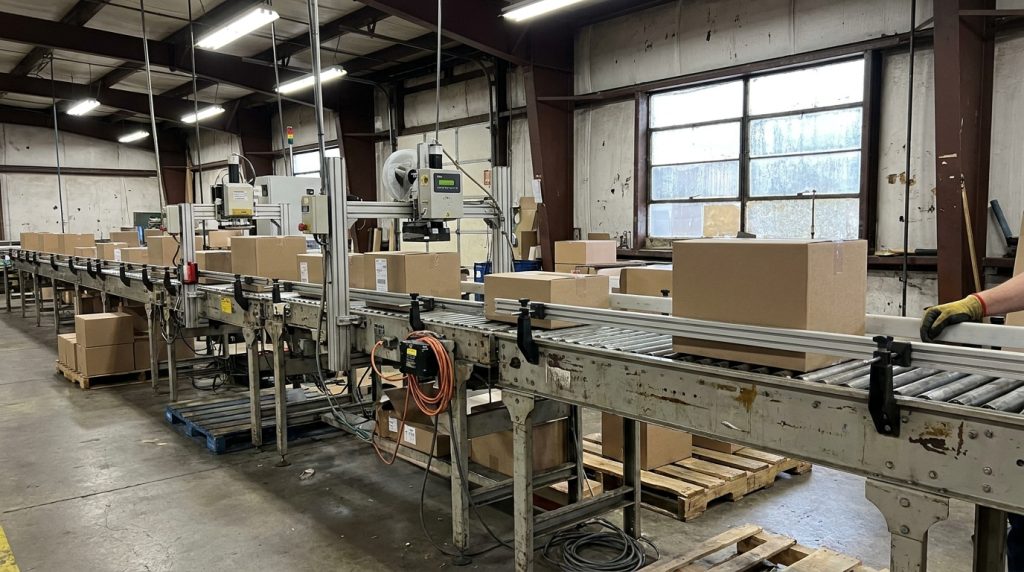
A well-designed packaging line should do more than move goods from one point to another. It should protect fragile items, support efficient handling, reduce waste, and help teams maintain a steady rhythm. This is where conveyors play a central role. They are not simply mechanical transport systems. They are part of the logic of production, connecting filling, sealing, labeling, inspection, packing, and palletizing into one coordinated flow.
In packaging environments, every second matters. A delay at one station quickly affects the next. If containers arrive unevenly, labels shift, seals fail, or cartons stack poorly. A smooth transport system helps prevent these problems before they grow into expensive bottlenecks. That makes movement a design issue as much as an engineering one. When products travel in a stable, predictable way, the entire packaging line performs better.
This shift has changed how brands and manufacturers think about presentation. Packaging is no longer just the final skin around a product. It is the result of a process that must work with precision from start to finish. A premium package loses its value if it arrives scratched, crushed, or poorly aligned because the line behind it lacks control. Good movement protects good design.
Packaging as a system, not a surface
The strongest packaging concepts balance visual identity with operational reality. A striking bottle shape may look impressive in a campaign, but it should also move reliably through production. An unusual carton format may attract attention, but it should still be easy to pack, stack, and ship. This is why packaging teams should think beyond aesthetics and consider how each form behaves in motion.
System thinking helps solve practical challenges early. Lightweight materials, for example, reduce shipping costs and support sustainability goals, but they may also require gentler handling. Flexible pouches save space and create a modern look, yet they demand accurate positioning throughout the line. Even small changes in dimensions or material texture can affect how products travel.
When movement gets ignored, packaging problems often appear later and cost more to fix. When movement gets planned from the start, teams gain better output, fewer stoppages, and a more reliable final product.
The link between efficiency and brand value
Consumers may never see a packaging line, but they notice its results. Clean seals, straight labels, undamaged corners, and consistent presentation all build trust. These details suggest care, quality, and professionalism. In that sense, operational efficiency directly supports brand value.
That connection matters even more as packaging becomes part of the customer experience. E-commerce, subscription models, and direct-to-consumer delivery have raised expectations. A package should survive transport, look intentional, and feel easy to open. None of that happens by accident. It depends on disciplined movement behind the scenes.
A smarter path forward
As packaging grows more ambitious, the systems that support it should grow smarter as well. Better flow leads to better protection, cleaner presentation, and stronger performance across the line. For companies that want packaging to work as hard as it looks, movement deserves a place at the center of the conversation.
 Guest Writer
 Agustina Bo
 paulaodisea
 IrinaNikatina2323
 SERIESNEMO
 Cupla Studio
 ZERO11
 VaryaDrebent
 hello ocean
 Yash Panchal
 Nina Patseva
 Modern Theory
 Dizen
 Ebbi
 monther al omari
 YNOT TONY Design Studio
 BOYA Printing
 NEV
 Andydesigns
 Armoder Arte y Diseño
 rufydesign
 Sti&Co Design
 Vijay Raj N | Brand Designer
 theabsurdcompany
 Hollóka Grafikai Műhely / Graphic Design Studio