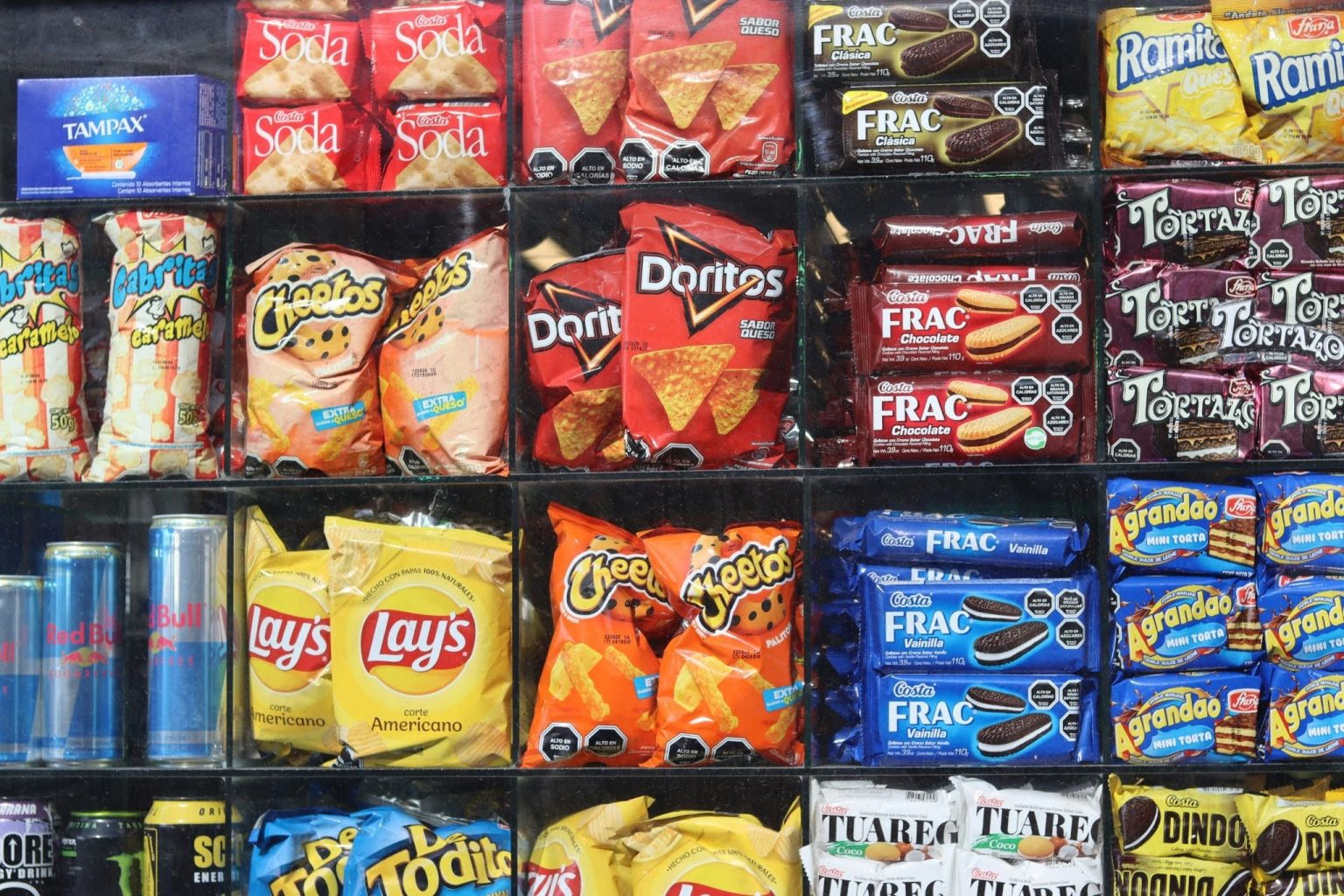

You grab a bag of snacks, open it up, and find a bunch of individually packed snacks.
Seems like a lot of plastic, right?
And it also makes you wonder when that started to happen because, for the most part, bags of snacks were just that. Bags of snacks. Now they’re bags with smaller bags inside them.
There’s actually a very practical reason behind this. Nowadays, people want snacks they can easily throw in their backpacks or desk drawers, and dragging a whole package around simply isn’t as convenient as grabbing one or two small packs.
And you’d think all it takes to make this work is to make the packaging smaller, but it’s not. That packaging still needs to protect whatever’s inside, fit all the information, look on-brand, and be easy to open and use.
You could say that smaller packaging has to work harder, right?
Why Snacks Have Smaller Packaging Now
You don’t always eat your snacks at home, do you? Well, that’s the biggest reason for packaging getting smaller. People take snacks to work, to the gym, to school, on road trips, and smaller packaging simply works better.
It’s easier to take than a whole big bag of stuff.
This is why lunchbox packs and grab-and-go formats are EVERYWHERE. Because they fit into everything, from pockets to bags to drawers. Also, with smaller packaging, you don’t have to pour the snack into another container before you leave the house.
Another reason for this change is portioning.
Have you ever bought a big bag of snacks, opened it, ate some, then left it for a few days? Then, when you go to eat some more, everything inside is gross and stale. Smaller packaging takes care of that because you can eat some, and the rest stays sealed and fresh until you want more.
No more stale crackers for you!
And let’s be honest, with overeating being such a huge issue right now, it’s not bad to have your snacks pre-portioned, so you don’t eat too much, right?
Of course, those small packs still have to be sold somehow, which is why you can buy multipacks. You can buy big bags of 10, 20, and even 30 individual servings, and that bag can work both on the shelf in the store and in your pantry. The smaller packs inside are what’s made for you to use every day.
Basically, the smaller packaging is due to people eating differently these days. Snacking isn’t tied to the kitchen anymore, and the packaging is simply following that.
What About the Design When the Packaging Shrinks?
Designers still have their hands full because smaller packaging doesn’t mean less work. In fact, it’s usually the opposite.
There’s less room for everything in that tiny little bag, yet somehow, it all has to fit AND look good.
Less Space for the Brand
When you have a big bag, there’s plenty of space for the logo, the name of the product, flavor, pictures, claims, ingredients, and everything else that needs to be there. On a small pack, though, all this has to fight each other because there’s not a lot of space.
So, designers make it all simpler.
They stick to a recognizable color and a logo, and instead of a bunch of text, they’ll do an illustration. The point is to make the packaging contain enough similar elements so the product looks on-brand.
1 Product, 2 Packages
Multipacks aren’t easy, either, because the big bag doesn’t do the same as the small bags inside. What’s on the outside is supposed to explain details about the product and have bigger branding. And it has to look recognizable on its own, no matter how many little bags you take out of it.
Probiotic mixed berry yoggies 30-count are a great example of this.
They have one bigger package with a lot of smaller snack packs, and what’s inside doesn’t have to be a copy of the larger container. Still, the connection should be there.
More Information in Less Space
Branding isn’t the only problem, sadly.
If you’re designing packaging for food, then you know that there has to be enough room for practical information there. You need to have space for the name of the product, the ingredients, nutritional values, allergens, net weight, and everything else that’s required to be on the label.
For example, in the U.S., it’s the Food and Drug Administration (FDA) that dictates what must appear on packaged food labels. If there’s anything missing, the product won’t be FDA-approved, and you won’t be able to sell that product legally inside the country.
And even a few extra words can be problematic on a tiny pouch.
The only way to go is to choose which information is the most important, and then treat that as a priority. Anything else can go on the back.
Conclusion
Smaller snack packs just make more sense now.
They’re easier in every way, and they might even help you not eat too much. When it comes to packaging, though, not only is nothing easier, but it’s even more complicated. You still have a bunch of information, and it all needs to fit on a little pouch.
This is why you usually won’t find smaller bags that are carbon copies of the bigger ones. It simply can’t work sometimes.
 Derrick Lin
 VincoStudio
 lisakaplina
 CreativeWise
 alchimistestudioParis
 Adriana Adamo
 tauqueer
 MAISON D'IDÉE Prague
 Pixels Studio
 Atchayaa
 DESIGN CONCEPTS
 hello ocean
 monther al omari
 the Labelmaker
 alamgirbrands
 kat bres
 Vantablack Studio
 GruppoSaida
 studiorevv
 grafisercreative
 Kate Reichel
 UPRISE