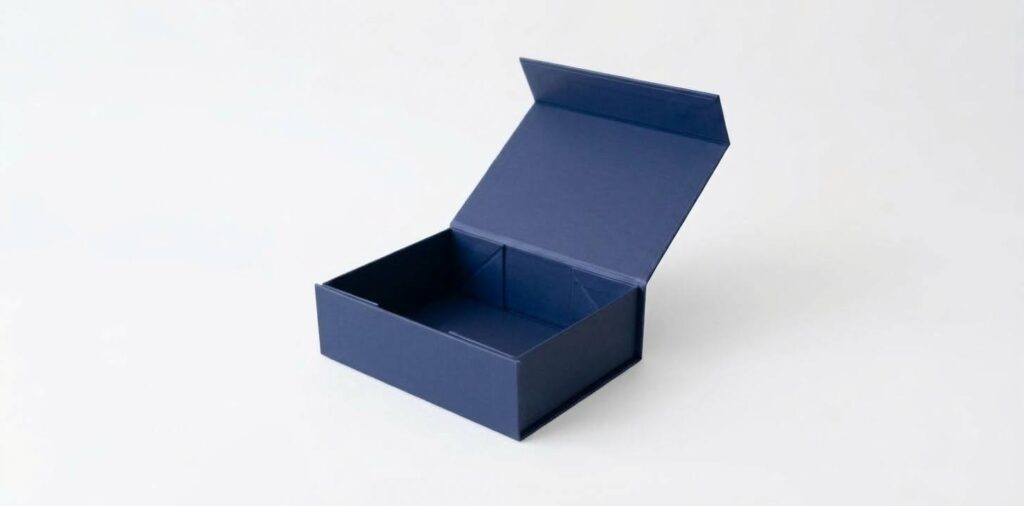

Ordering rigid boxes involves more than choosing a color and adding a company logo. Brand owners need to consider product dimensions, box construction, materials, interior protection, printing, and delivery requirements before placing an order. Each decision affects how the packaging looks, performs, and fits into the product’s overall presentation.
For retail businesses, premium packaging also influences how customers perceive a product before they use it. A jewelry box should feel different from an electronics package, while a gift box may need additional space for decorative elements. Understanding these differences helps businesses select custom rigid boxes that suit their products, customers, and sales channels.
Determine Product Dimensions Before Selecting a Box Style
The first step is measuring the product accurately. Even a well-designed package can become impractical if the product fits too tightly or moves around inside during transportation.
Measure the product’s length, width, and height at its widest points. If the item has an unusual shape, measure its overall dimensions rather than relying on a single measurement. Remember to account for protective inserts, wrapping materials, and any accessories packed alongside it.
A useful sizing checklist includes:
- Product length, width, and height.
- Additional clearance for easy placement and removal.
- Insert thickness and internal compartments.
- Lid depth and opening space.
- Product weight and handling requirements.
For example, a perfume bottle may require a fitted insert to prevent movement, whereas a clothing accessory might need a wider interior with tissue paper. The final internal dimensions should accommodate the complete product arrangement, not just the main item.
Choose Custom Rigid Packaging That Match Your Product and Retail Market
Once the measurements are clear, select a structure that supports the product’s purpose. Different rigid box styles create different opening experiences, storage benefits, and levels of convenience. The right choice depends on how customers receive and use the product.
Custom Two Piece Rigid Boxes
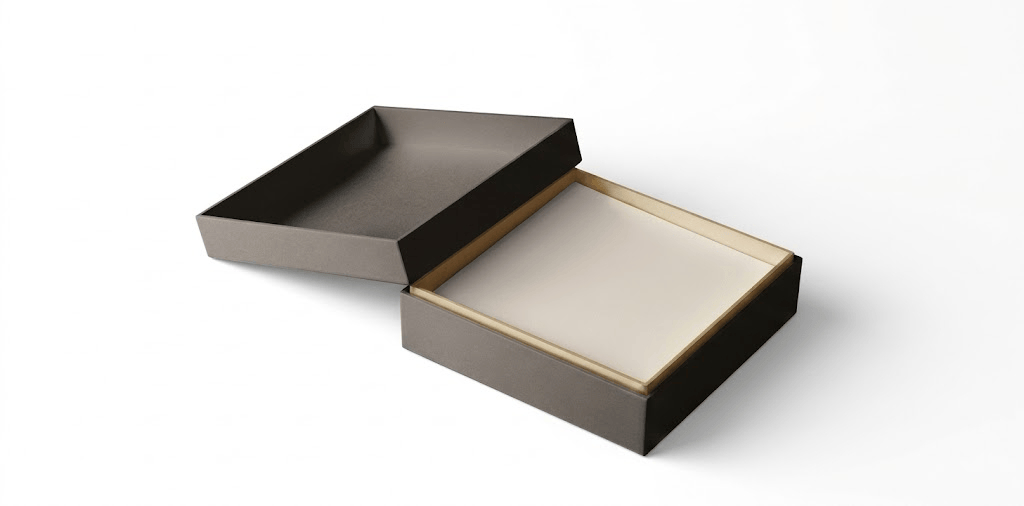
Two-piece rigid boxes feature a separate lid and bottom tray. Their simple construction makes them suitable for jewelry, watches, clothing accessories, and premium gift sets. Brands often choose this style when they want a traditional presentation with a clean, structured appearance.
Custom Magnetic Closure Rigid Boxes
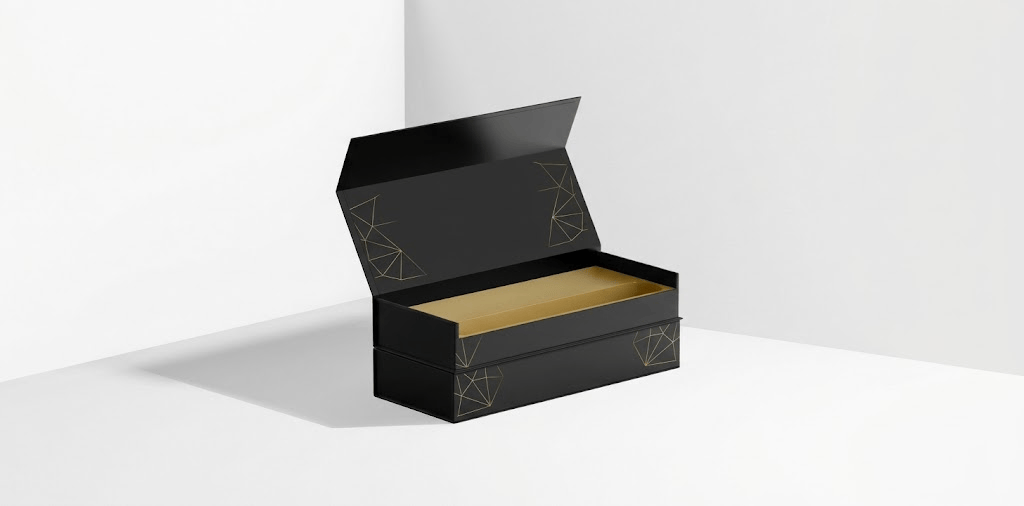
Magnetic closure boxes use a hinged lid with concealed magnets that keep the package securely closed. They work particularly well for cosmetics, skincare collections, corporate gifts, and premium electronics.
The opening movement gives customers a clear view of the product, making this structure useful for gift packaging and presentation kits. However, magnet strength and closure alignment should be checked during sampling.
Custom Rigid Drawer Boxes
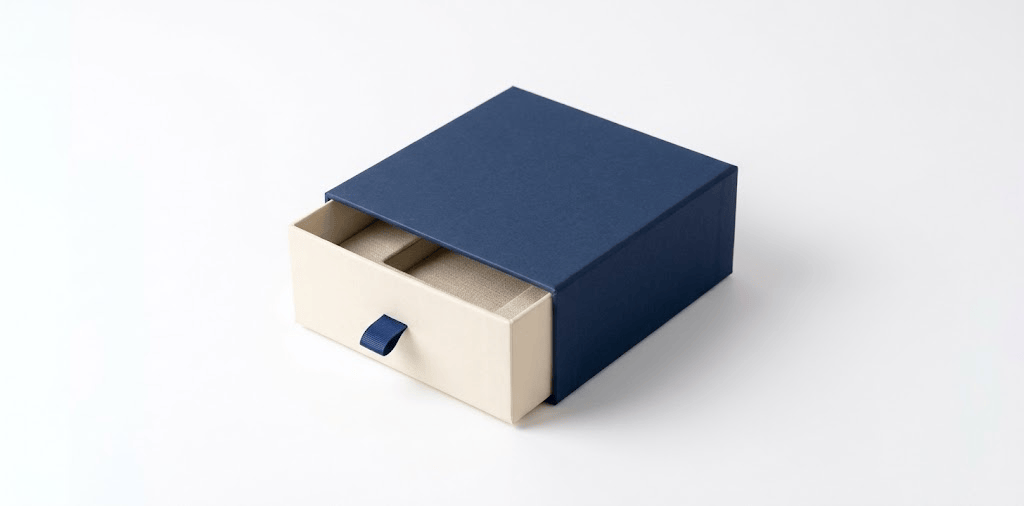
Drawer-style rigid boxes contain an inner tray that slides out of an outer sleeve. Ribbon pulls can make opening easier while adding a decorative feature.
Jewelry, watches, small accessories, and specialty product collections are common applications. This style also creates room for a branded message inside the sleeve.
Custom Booklet Rigid Boxes
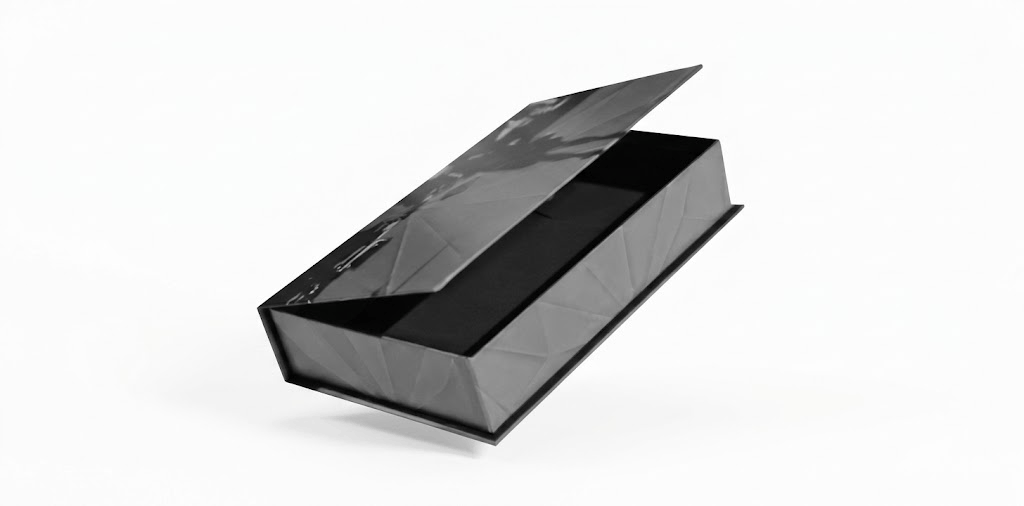
Book-style boxes open from one side like a hardcover book, while neck and shoulder boxes use an elevated inner frame between the lid and base. Both structures suit premium retail products that require a distinctive presentation.
A business selling limited-edition products, luxury gift collections, or high-value accessories may benefit from these formats. The additional structure can create a more deliberate presentation without relying on excessive decoration.
Select Materials, Inserts, and Finishes for Better Presentation
The material determines how a rigid box feels, how well it holds its shape, and how effectively it protects the product. Most rigid packaging uses a thick greyboard core covered with printed paper or specialty wrapping material. Board thickness should reflect the product’s weight, box dimensions, and intended use.
For lightweight jewelry or small gift items, a thinner board may be sufficient. Heavier products and larger presentation boxes may require thicker construction to maintain their shape.
The outer wrapping material also deserves attention. Common choices include:
- Coated art paper: Suitable for detailed graphics, product photography, and brand colors.
- Textured paper: Adds a tactile finish for premium retail and gift packaging.
- Kraft paper: Offers a natural appearance for brands that prefer a simpler presentation.
- Specialty paper: Provides distinctive patterns, textures, and surface effects.
Choose an Insert That Holds the Product Securely
An insert should be designed around the product rather than selected as an afterthought. Custom packaging solutions offer customized packaging solutions that can accommodate different insert options, including foam inserts for delicate electronics, glass containers, and jewelry. Paperboard dividers work well for gift collections containing several products, while molded pulp provides another option for brands exploring fiber-based packaging.
Add Finishes That Support Your Brand Identity
Printing and finishing choices influence the final appearance of the package. Popular options include:
- Matte and gloss lamination for surface protection and appearance.
- Soft-touch coating for a smooth, velvet-like feel.
- Gold or silver foil stamping for logos and decorative details.
- Embossing and debossing for raised or recessed artwork.
- Spot UV for highlighting selected design elements.
A useful approach is to choose one or two finishes that complement the brand rather than combining every available option. For example, a skincare company might use a matte exterior with a small foil-stamped logo, while a jewelry brand could prefer textured paper and subtle embossing.
Review Artwork, Pricing, and Samples Before Production
Packaging artwork should be prepared according to the manufacturer’s dieline. A dieline shows the exact dimensions, panels, edges, wrapping areas, and positioning required to produce the box. Designing without the correct template can lead to misplaced logos, uneven margins, and artwork appearing across unwanted edges.
When preparing the design, check the following details:
- Logo size and placement on the lid and side panels.
- Correct brand colors and printing specifications.
- Text readability and spelling.
- Bleed, safe areas, and image resolution.
- Interior printing and insert positioning.
Request a digital proof before approving the artwork. However, a digital preview cannot fully demonstrate board strength, material texture, color appearance, or how the closure operates.
Why a Physical Sample Matters
A physical sample allows you to test the actual packaging before committing to a larger order. Place the product inside, close the lid, remove the item, and check whether the insert holds everything securely.
Pay particular attention to corner alignment, wrapping quality, magnet strength, print registration, and the overall fit. If the box contains a fragile or expensive product, test the complete packaging arrangement before approving bulk production.
Compare Quotes Beyond the Unit Price
Ask manufacturers to provide a detailed quotation covering:
- Minimum order quantity (MOQ).
- Cost per box at different quantities.
- Sample and tooling charges.
- Printing and finishing costs.
- Insert and customization charges.
- Production timeline and shipping fees.
A lower unit price does not always mean a better deal. For example, a supplier may offer an attractive manufacturing rate but charge separately for samples, custom inserts, or international freight. Comparing the complete order cost makes budgeting more reliable.
Confirm Quality Control, Shipping, and Final Delivery
Production approval is not the last step. Brand owners should confirm how finished packaging will be inspected, packed, and transported before the order leaves the manufacturing facility.
Rigid packaging is generally delivered assembled, which means it can occupy more warehouse and shipping space than flat-packed folding cartons. Some manufacturers also offer collapsible rigid structures for businesses looking to reduce storage and freight requirements.
Before confirming delivery, discuss these points with your supplier:
- Confirm the expected production completion date.
- Ask how boxes are checked for structural defects.
- Verify printing consistency across the entire order.
- Check that inserts, closures, and finishes meet the approved sample.
Shipping and delivery
- Confirm whether the quotation includes freight charges.
- Ask about available shipping methods and tracking.
- Verify the delivery address and estimated arrival date.
- Discuss customs duties and import charges for international shipments.
- Request protective shipping cartons to minimize damage.
For US businesses ordering from overseas manufacturers, customs clearance and transportation can affect the final delivery date. Therefore, packaging should be ordered well ahead of a product launch, seasonal campaign, or retail promotion.
Conclusion: Make Every Packaging Decision Count
Ordering custom printed rigid boxes becomes easier when each decision is made in the right order. Start with accurate product measurements, select a suitable structure, choose durable materials, and finalize the inserts and finishes. Then review the artwork, approve a physical sample, compare complete quotations, and confirm delivery arrangements.
These steps help businesses avoid common packaging mistakes while ensuring the finished product meets practical and presentation requirements. Whether a brand sells cosmetics, electronics, jewelry, or premium gifts, packaging should support both product protection and customer expectations.
 sashapanchenko
 buddybuddyco
 B&WGraphicLab
 YNOT TONY Design Studio
 Agustina Bo
 Widakk Design
 Amjad Battal
 Denis Irisov
 Rohan Barwal | D2C Brand Identity, Logo & Packaging Designer
 SOT B&D
 Le Studio G
 Studio Craig Black
 Agence des Coteaux
 Ahmed Badr
 provsnfactory
 Minim Brand Design
 Rodrigo Sanjurjo
 Aspa Chroneou
 HAJOK Design
 a3packaging
 Katerina
 Rabia zouina