
Berry Life: From Cranberry to Object of Desire
Berry Life had spent eight years building value through the product itself: artisanal cranberry juice, free from preservatives and added sugars, with an unusual aging process in cedar barrels. The challenge for the project developed in 2025 by Carreto Concepts Design Studio was to make that level of care visible. The healthy beverage category often relies on functional, fresh, and predictable visual codes; Berry Life needed to express exclusivity, character, and desire without losing the credibility of its artisanal origins.
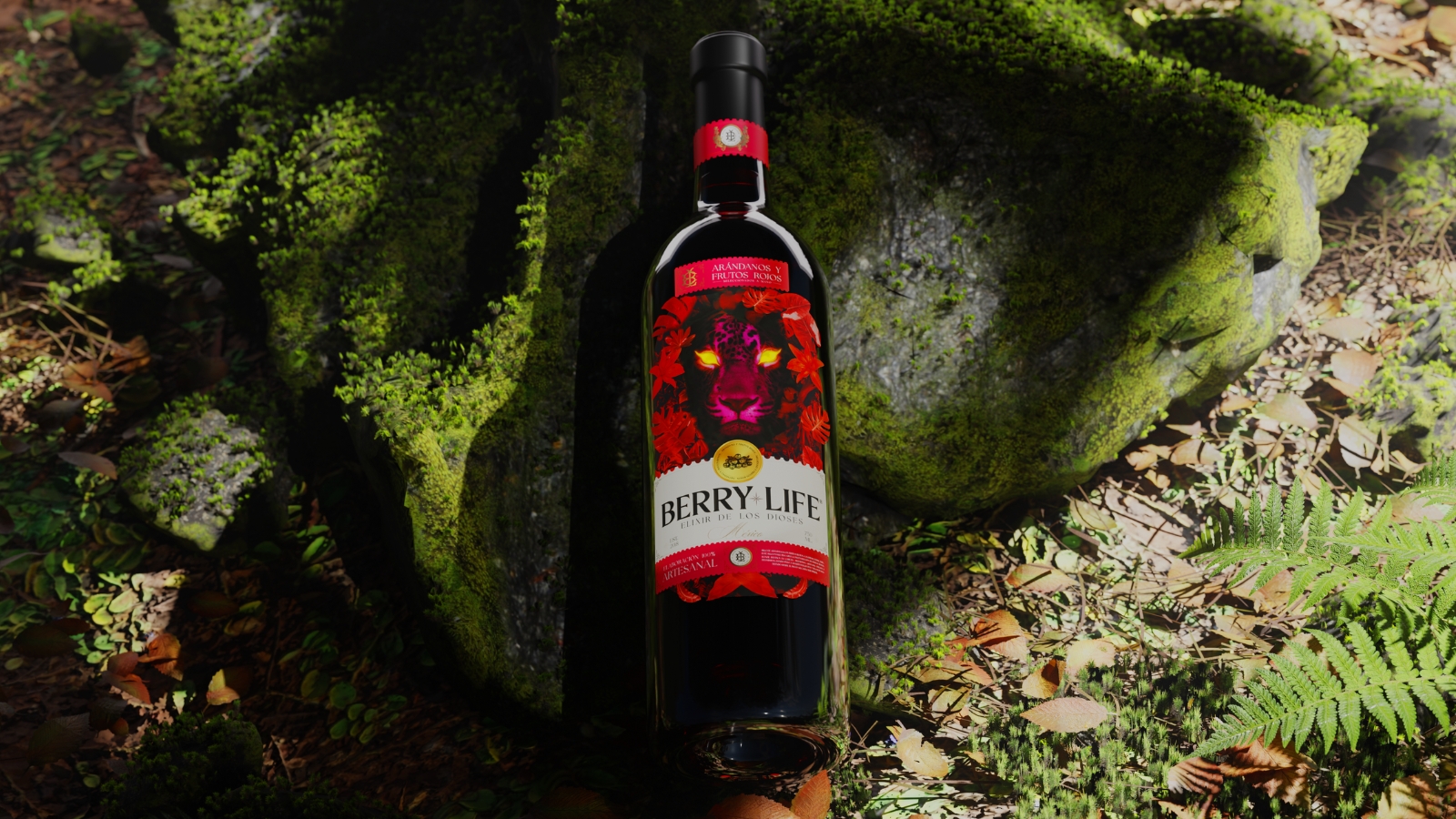
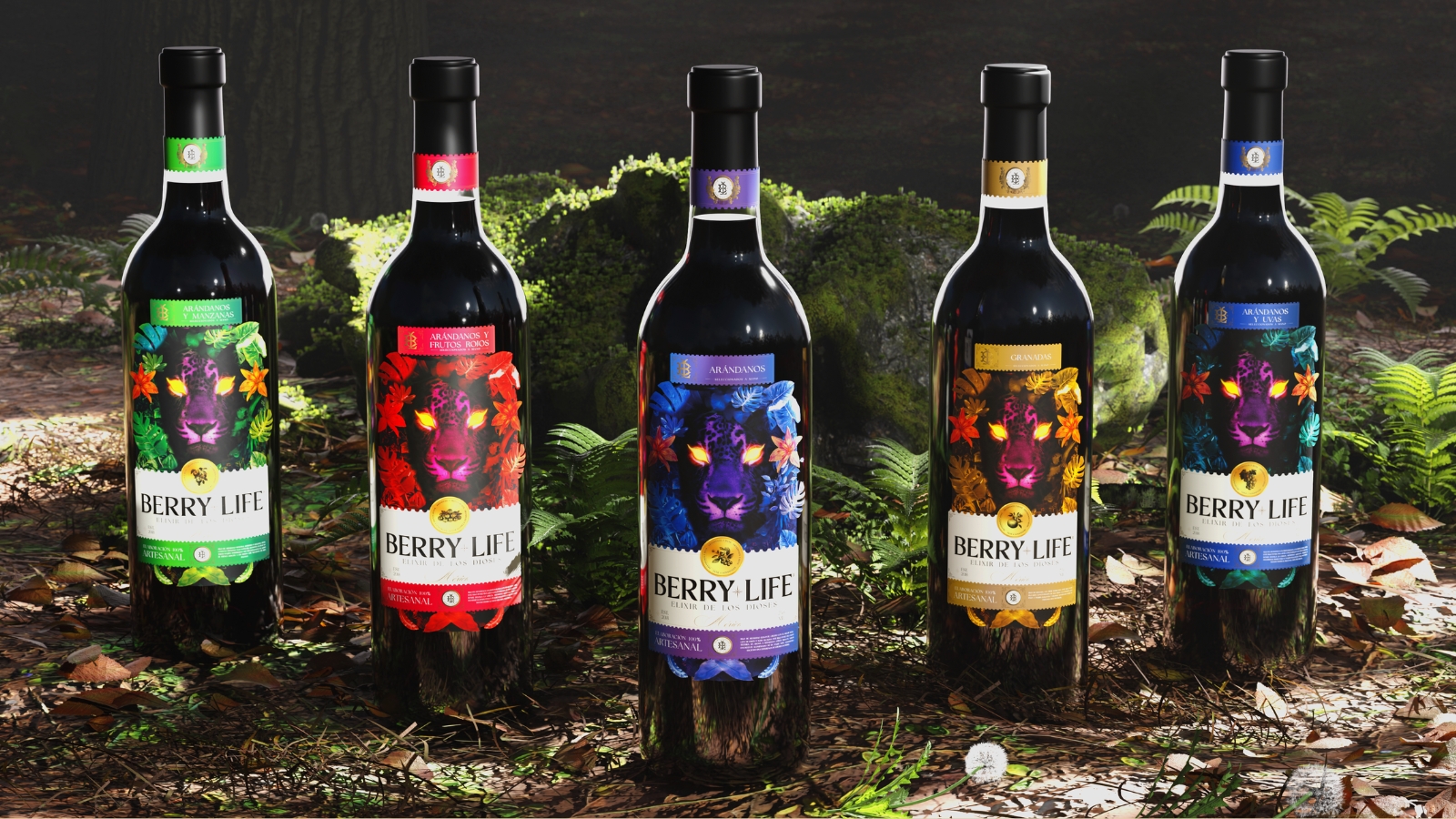
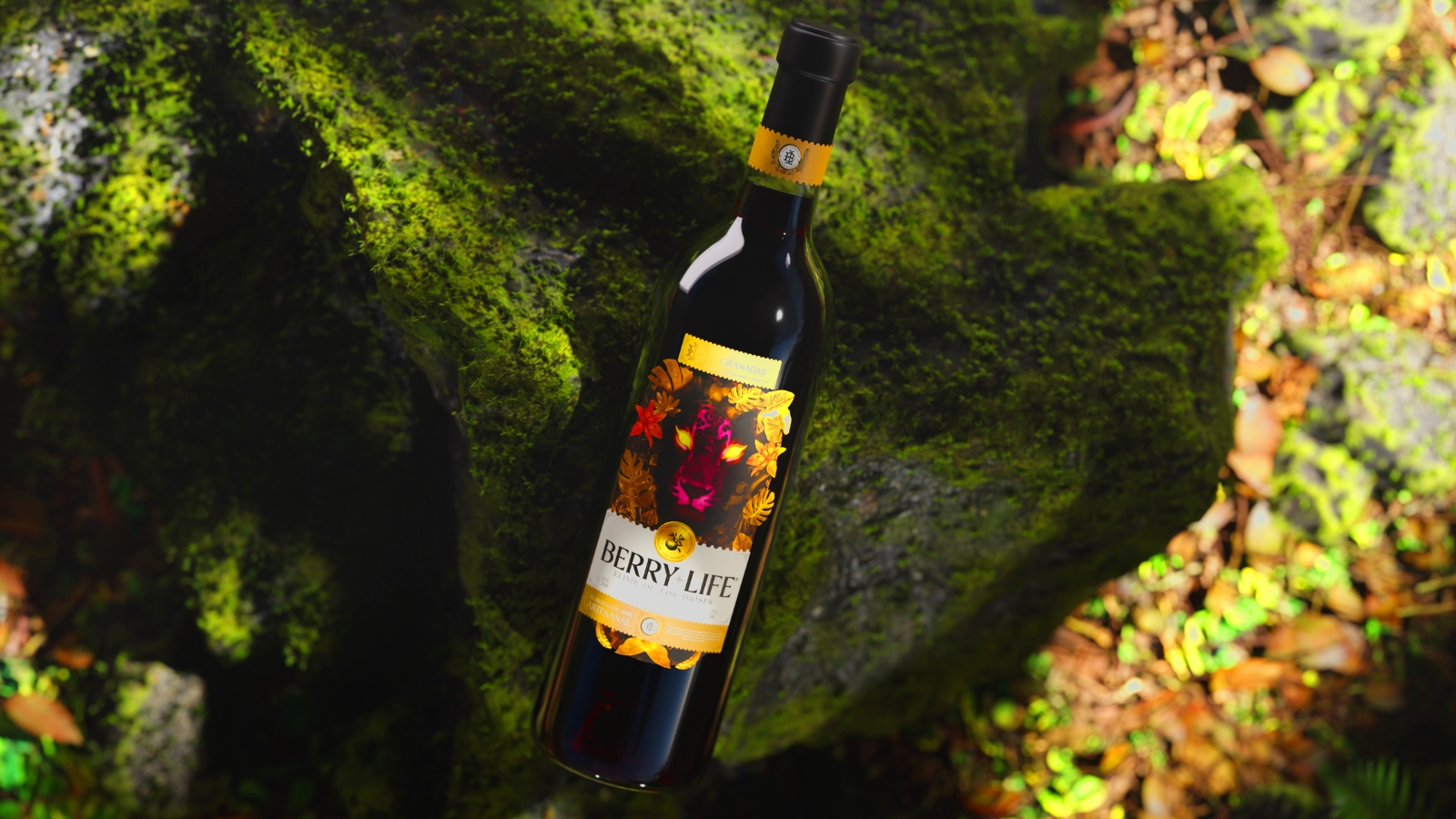
The strategy found its territory in Mexican culture and the figure of the jaguar. Power, protection, spirituality, and nature are translated into a system where pre-Hispanic-inspired geometries, large-scale illustration, and an intense color palette create an almost ceremonial presence. Gold introduces a sense of luxury, while violets, magentas, greens, and reds amplify the exotic character and help differentiate flavors without fragmenting the family. The result visually moves away from the conventions of everyday juice and brings the bottle closer to the language of a collectible object.
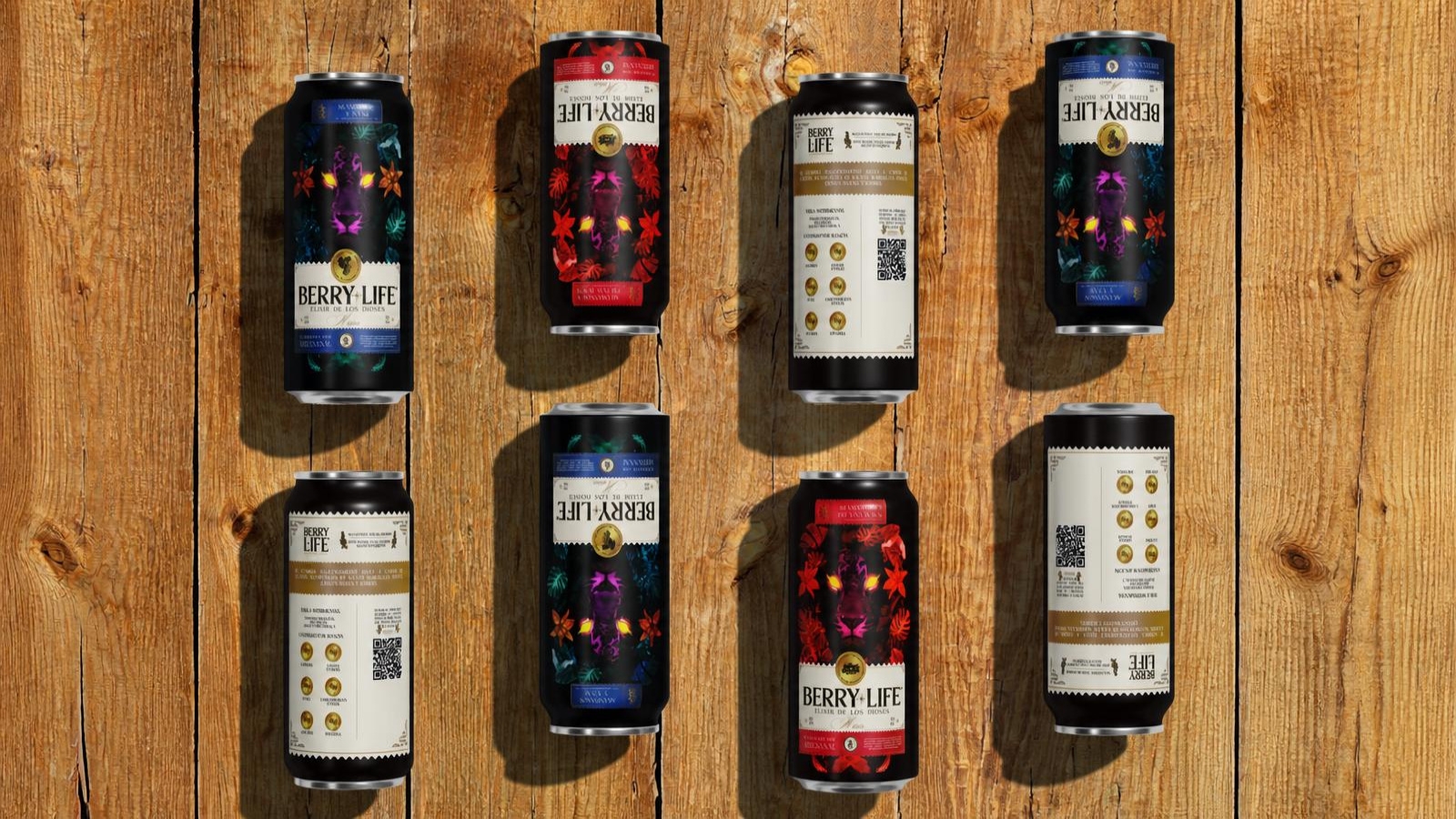
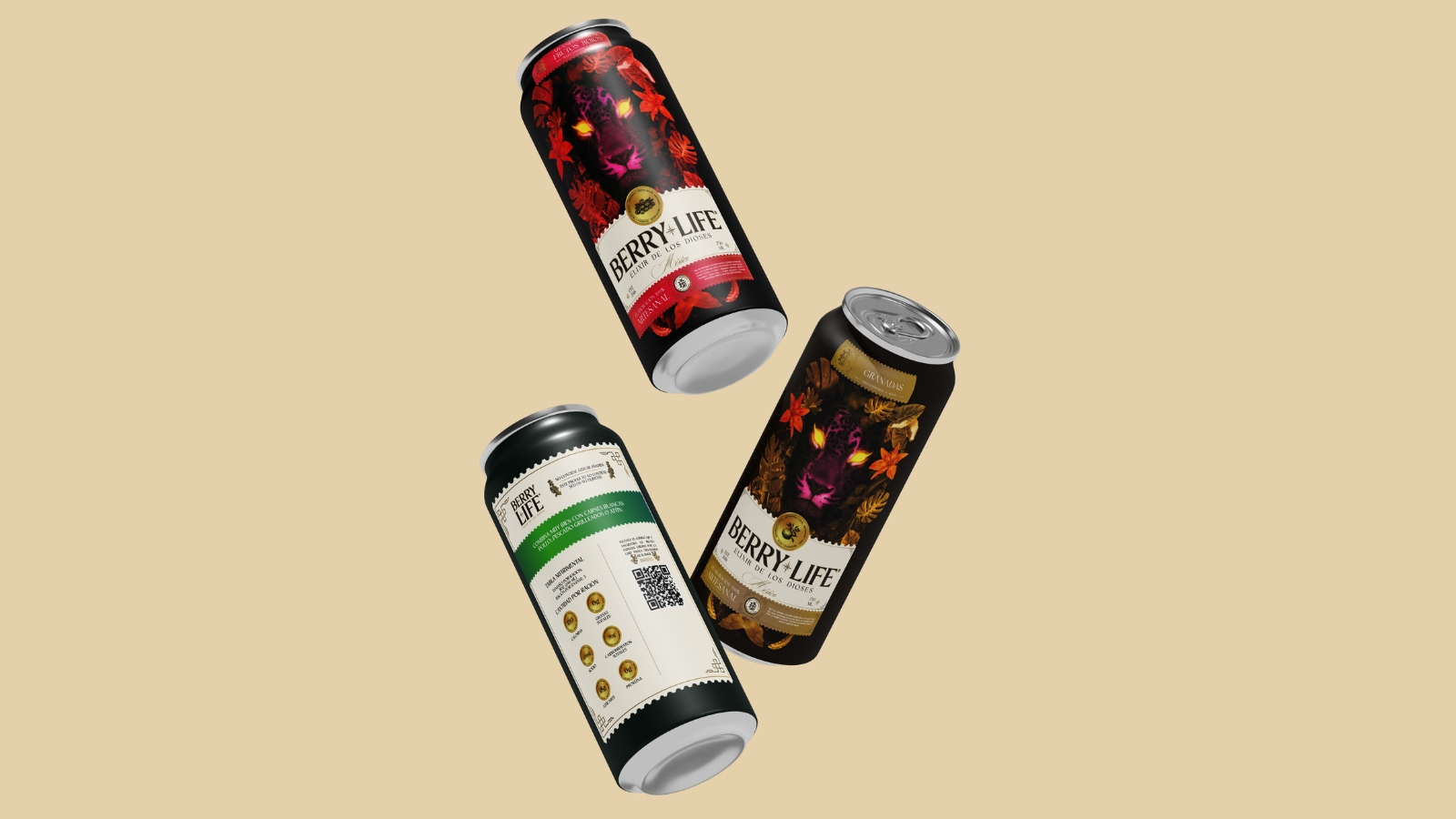
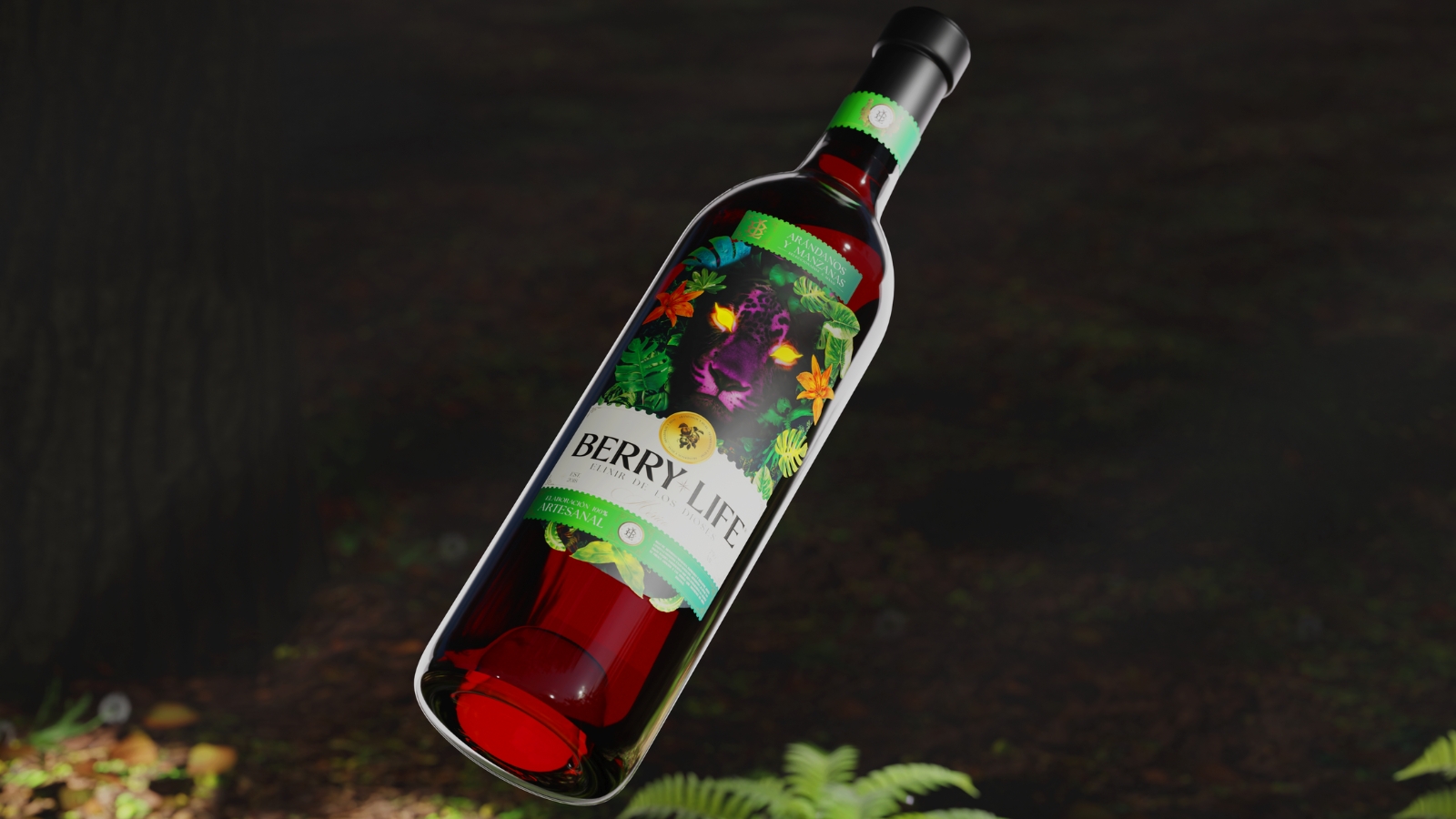
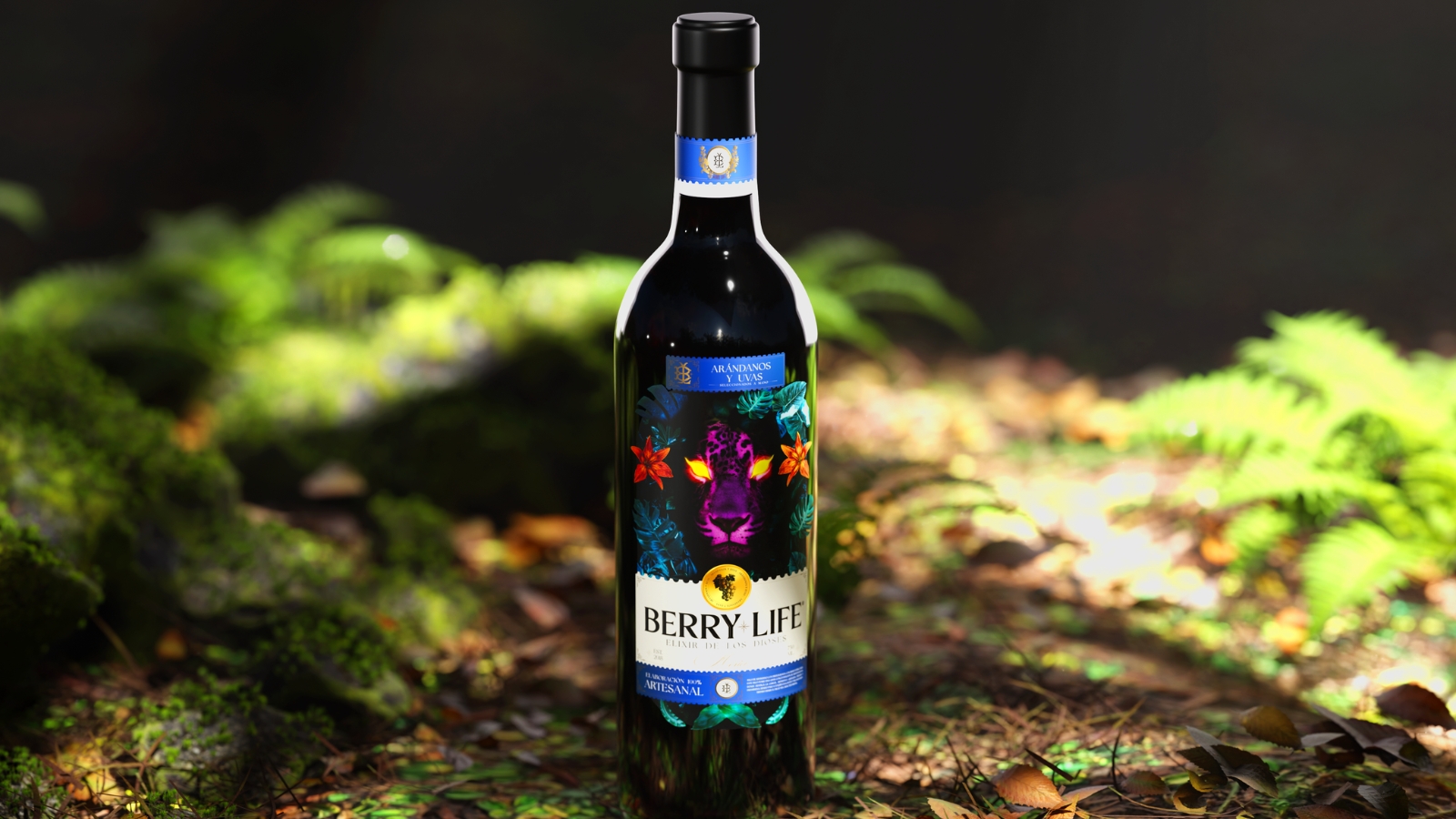
The packaging concentrates that narrative. Balam, the jaguar that protects the barrels in the brand’s storytelling, turns the production process into myth and gives the product a recognizable character. The vertical labels combine fauna, vegetation, symbols, typographic hierarchies, and specific color codes for cranberry, red fruits, apple, grape, or pomegranate. The structure maintains a clear central area for Berry Life and the descriptor “Elixir of the Gods,” while the front and back incorporate artisanal origin, food pairings, nutritional information, and QR codes. The bottle therefore works simultaneously as a story, a variant identifier, and a commercial argument.
This system allows Berry Life to grow without losing its identity. The brand already extends into new presentations, merchandising, outdoor communication, apparel, and digital environments, showing that the project’s value lies in having created a recognizable architecture around a product that previously depended mainly on its functional attributes. Design changes the conversation: health, craftsmanship, and culture begin to coexist with sophistication, desire, and a visual presence that is difficult to confuse on the shelf.
 butterflyhunters
 monther al omari
 Asprey Creative
 About House of Ta
 Up-Brands
 KJS CRAFT
 hello ocean
 PG Branding
 CF Napa Brand Design
 booouuuche
 Hyejung Choi
 Abbydraw Designs Unique Conceptual Branding & Packaging Designing Ideas
 Hollóka Grafikai Műhely / Graphic Design Studio
 Minim Brand Design
 saerom81
 YNL
 bilel tkouri
 vitoramockup
 Lampra
 Sanavala
 www.branding.uz
 alchimistestudioParis
 Estudio Argo
 Modern Theory