
Couchetoi Turns Everyday Charcuterie Into a Playful Visual Story
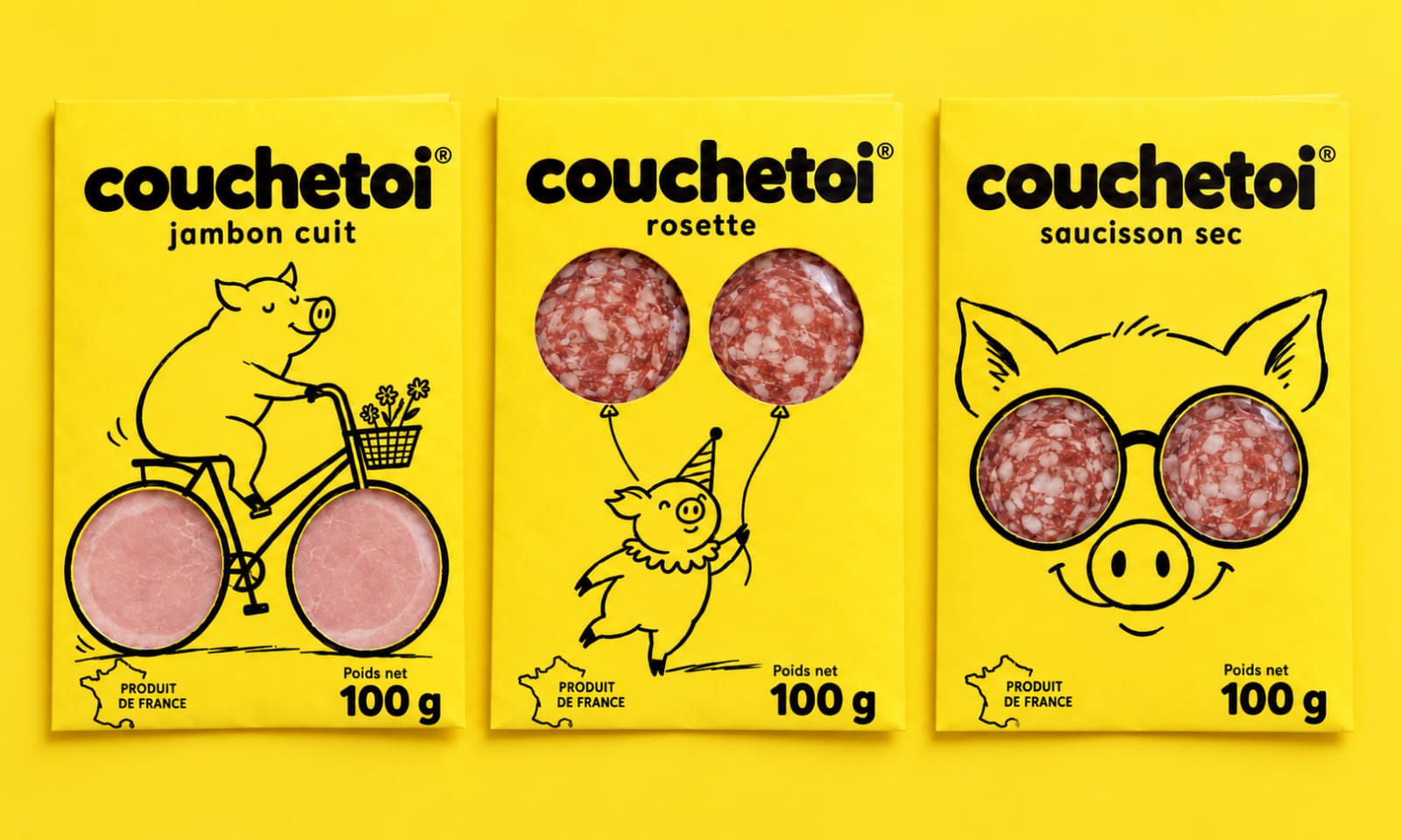
A pig riding a bicycle. A clown holding balloons. A smiling snout behind oversized glasses. Welcome to couchetoi, a charcuterie packaging concept that brings a little mischief to the deli aisle.
Created by L’Alchimiste Studio for the French market, the identity combines a bright yellow background, a bold lowercase wordmark and loose black sketches. The name sets a cheeky tone, while the stripped-back graphic language gives each character room to tell its story.
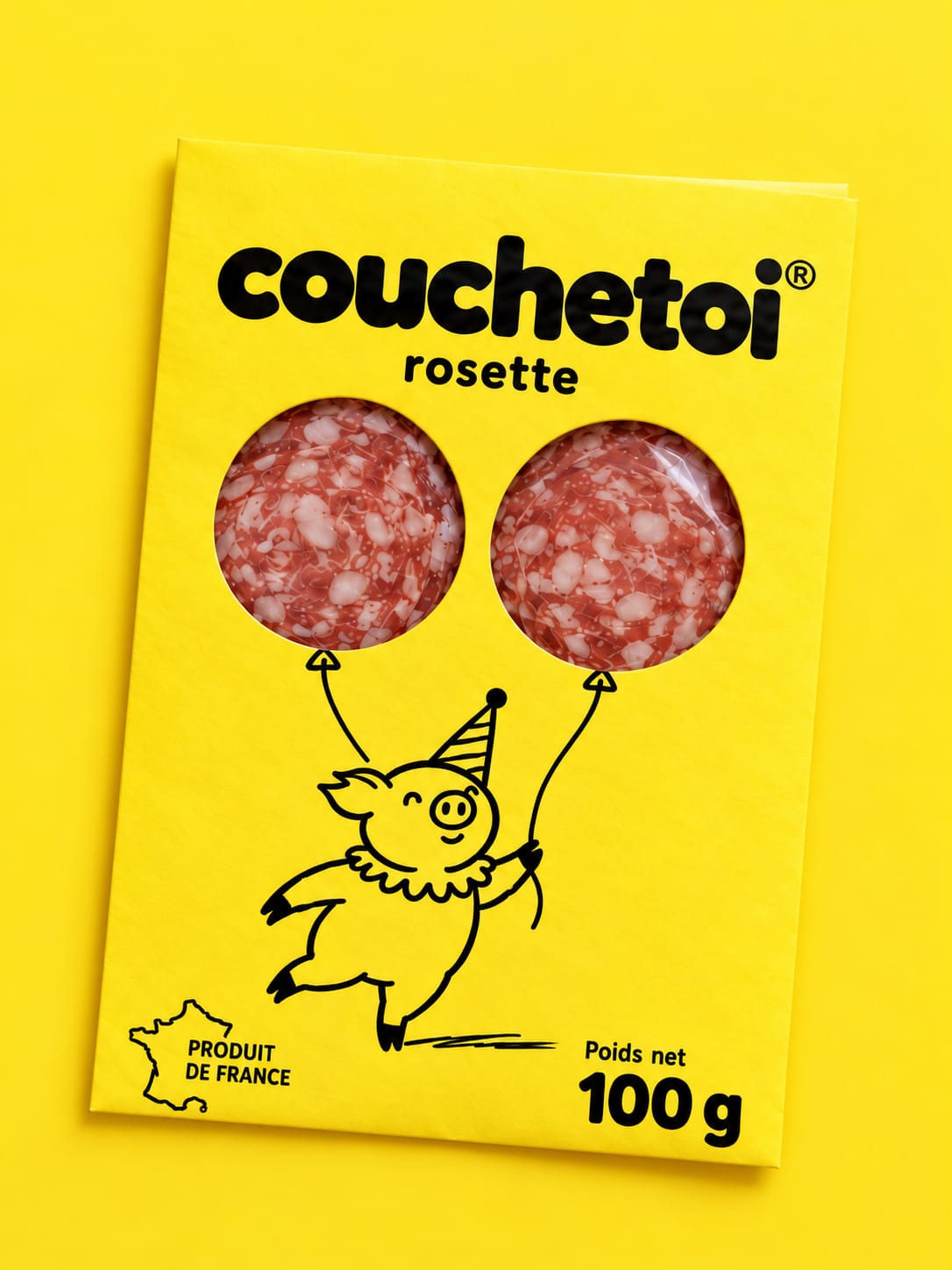
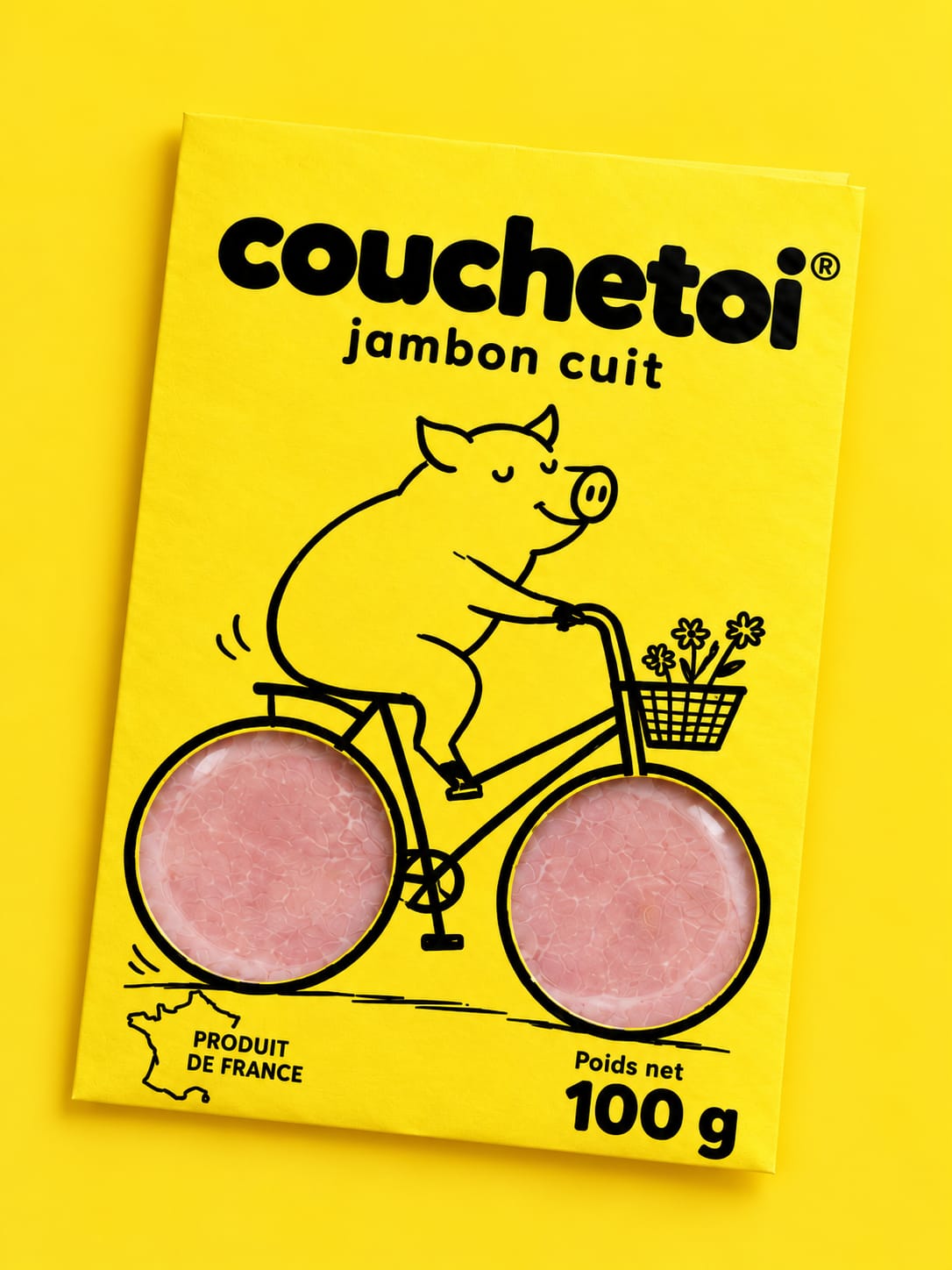
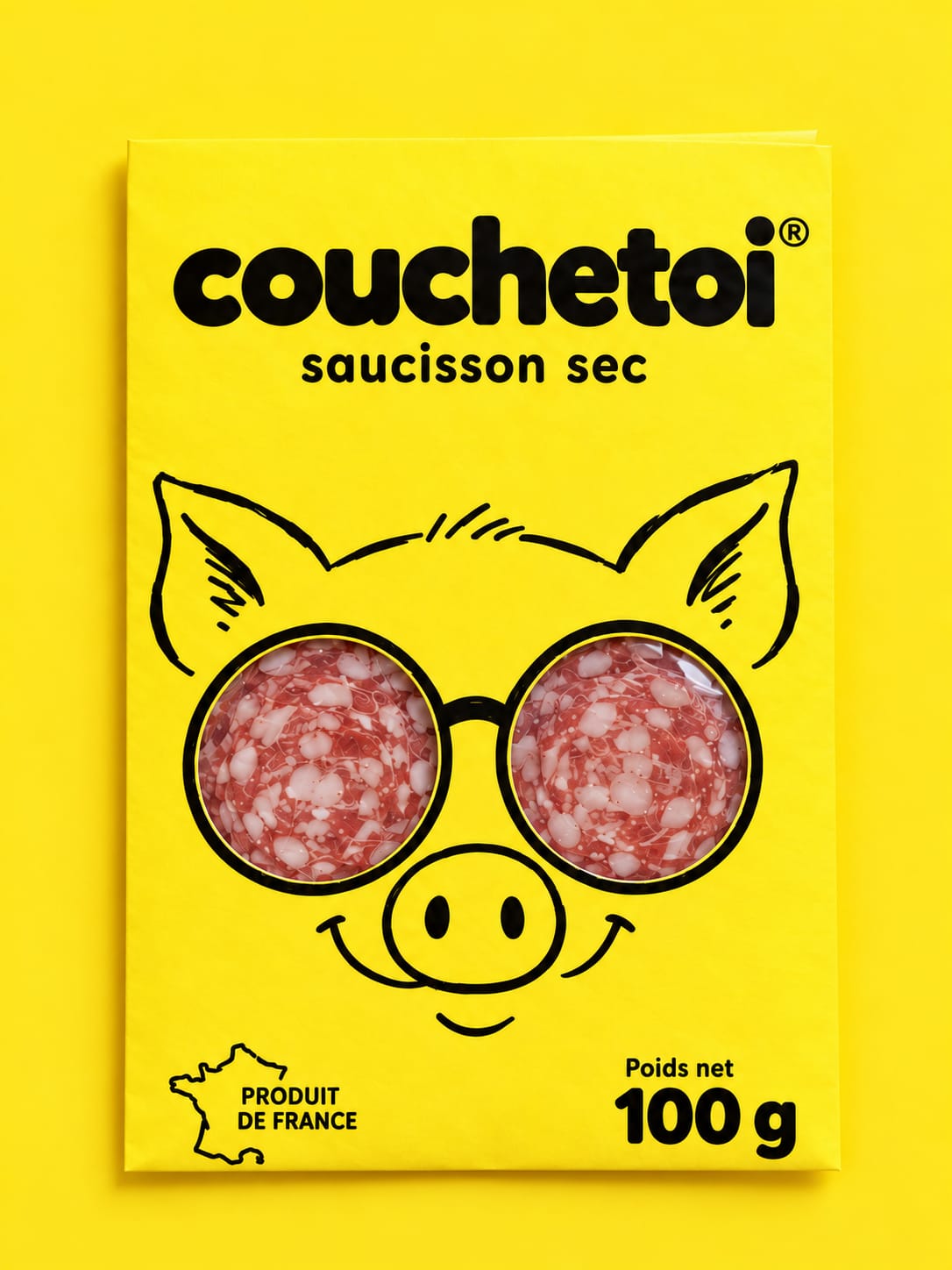
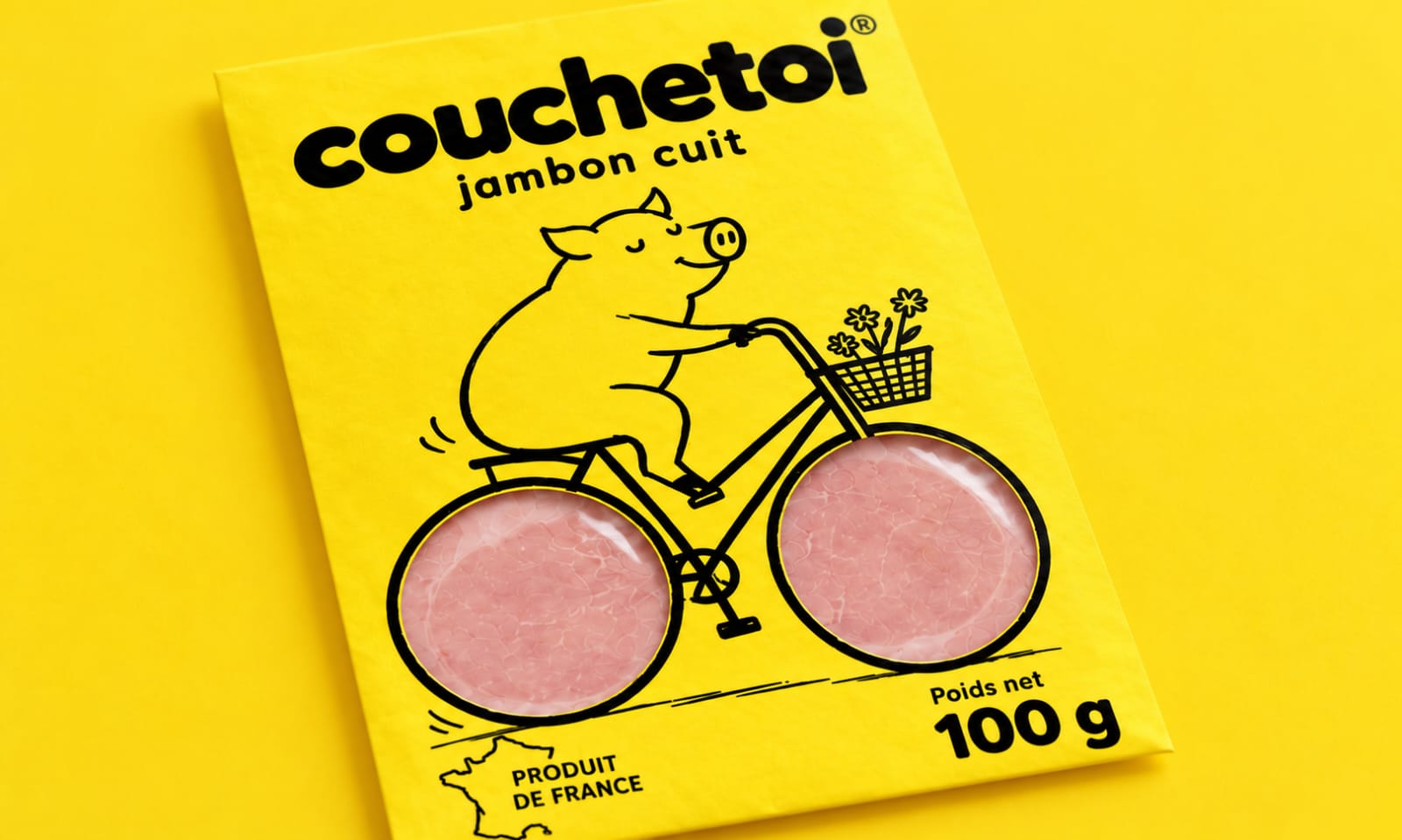
The idea begins with two transparent windows. On the cooked ham pouch, they become bicycle wheels beneath a pig pedalling along with a basket on the handlebars. For the rosette, they turn into balloons held by a pig clown. On the dry sausage variety, they form the lenses of a pair of round glasses.
These windows connect the illustration to the food itself. The colour and texture of the charcuterie complete each scene, making the contents an active part of the identity. Flat, round slices give the drawings their simple, readable shapes.
The proposed packaging takes the form of a slim paperboard pouch, folded like an envelope, with transparent film behind the circular openings. Its broad yellow face provides a clear canvas for the typography and sketches.
Across the three varieties, the same restrained palette and consistent layout hold the range together. Each pouch has its own personality, recognisable through a different interaction between character and product.
Couchetoi finds its humour in a small visual surprise: two ordinary windows becoming something familiar, unexpected and immediately understandable.
Curator’s Insight
What makes couchetoi work is how much the packaging asks of the product. The slices are not just contents behind a window, they are the wheels, the balloons and the lenses, so the food does the final bit of drawing. Because the sketches stay loose and the yellow stays flat, the real texture of the meat becomes the most detailed thing on the pouch, and it reads instantly on a crowded shelf. It also shows how a single constraint, one round opening repeated across the range, can generate three distinct personalities without breaking the system.
 Otherness
 Alena Chemodurova
 Estudio Argo
 Pomodoro Design Office
 amandacoppeti
 Rabia zouina
 VANESA GARCÍA ESTUDIO
 anima
 Radar Agency
 Aadarsh Jain
 M&A CREATIVE AGENCY
 Valérie Colace
 Antonia Skaraki
 Aurora Baréalisse
 Artrime Graphic Design
 Just Design
 ANONIMA/
 Armoder Arte y Diseño
 eimanbeh
 Biaa
 Hartson Creative
 Karen Danielyan
 AUN BRANDS
 Studio Zak
 Hey Joe Studio