

The Brief
Based in New Jersey, Luscious Spirits Craft Distillery stands at the intersection where ancient craft traditions meet modern technology. To launch their premium craft spirits line—featuring their flagship 12+1 American Dry Gin and the vibrant 12+1 Butterfly Blue Gin—the distillery required a visual identity and packaging system that felt both classic and uniquely artisan.
The goal was to create a design that immediately communicates small-batch mastery, intricate botanical craftsmanship, and timeless elegance on store shelves and bar tops alike.
The Concept & Design Story
Designed by artist and veteran beverage designer Yaroslav Shkriblyak, the project centers on combining high-detail engravings with modern typography and geometric motifs. Having spent years refining visual identities for luxury alcohol brands, Shkriblyak’s signature style shines through meticulous attention to detail and hyper-refined artwork.
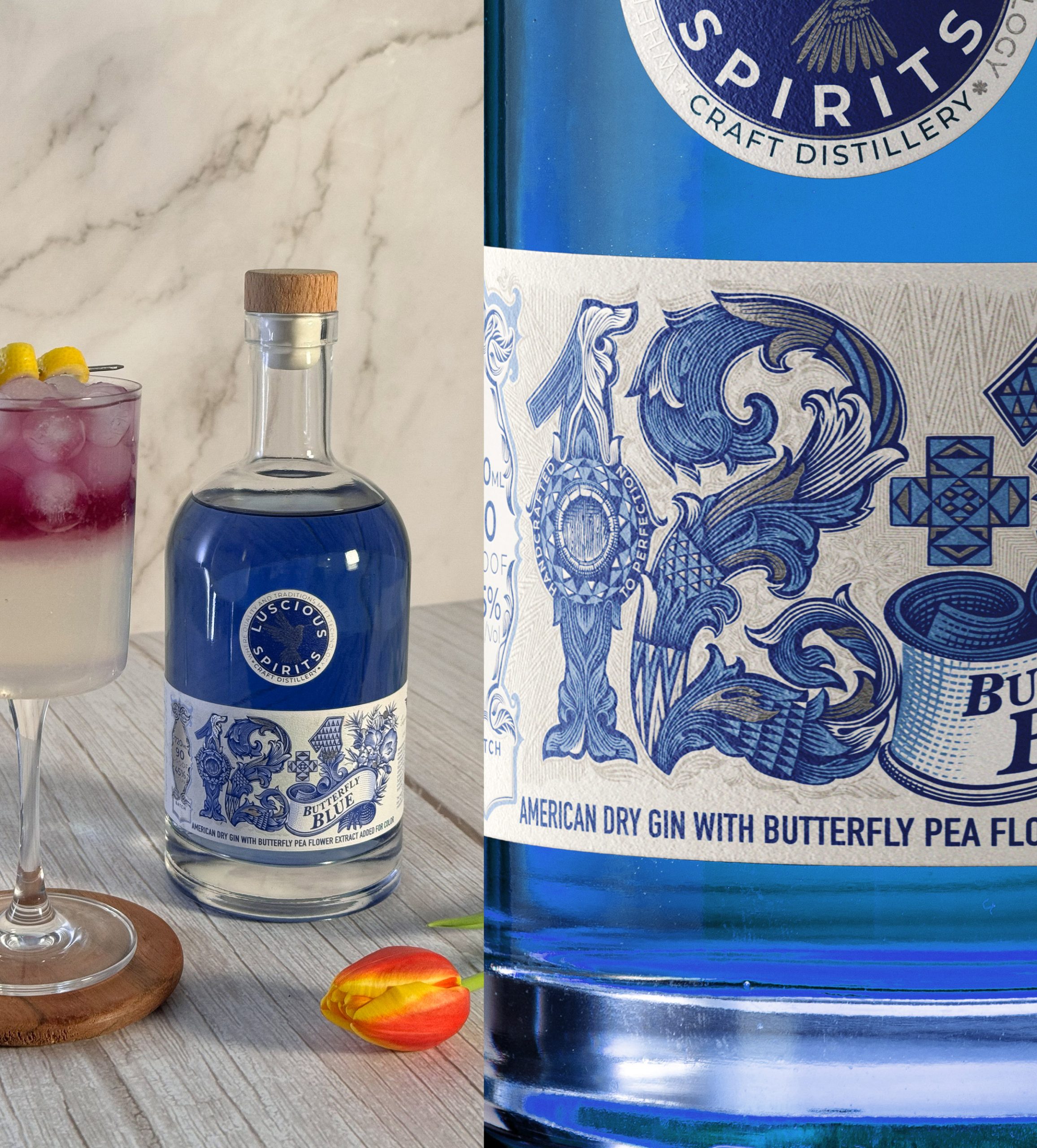
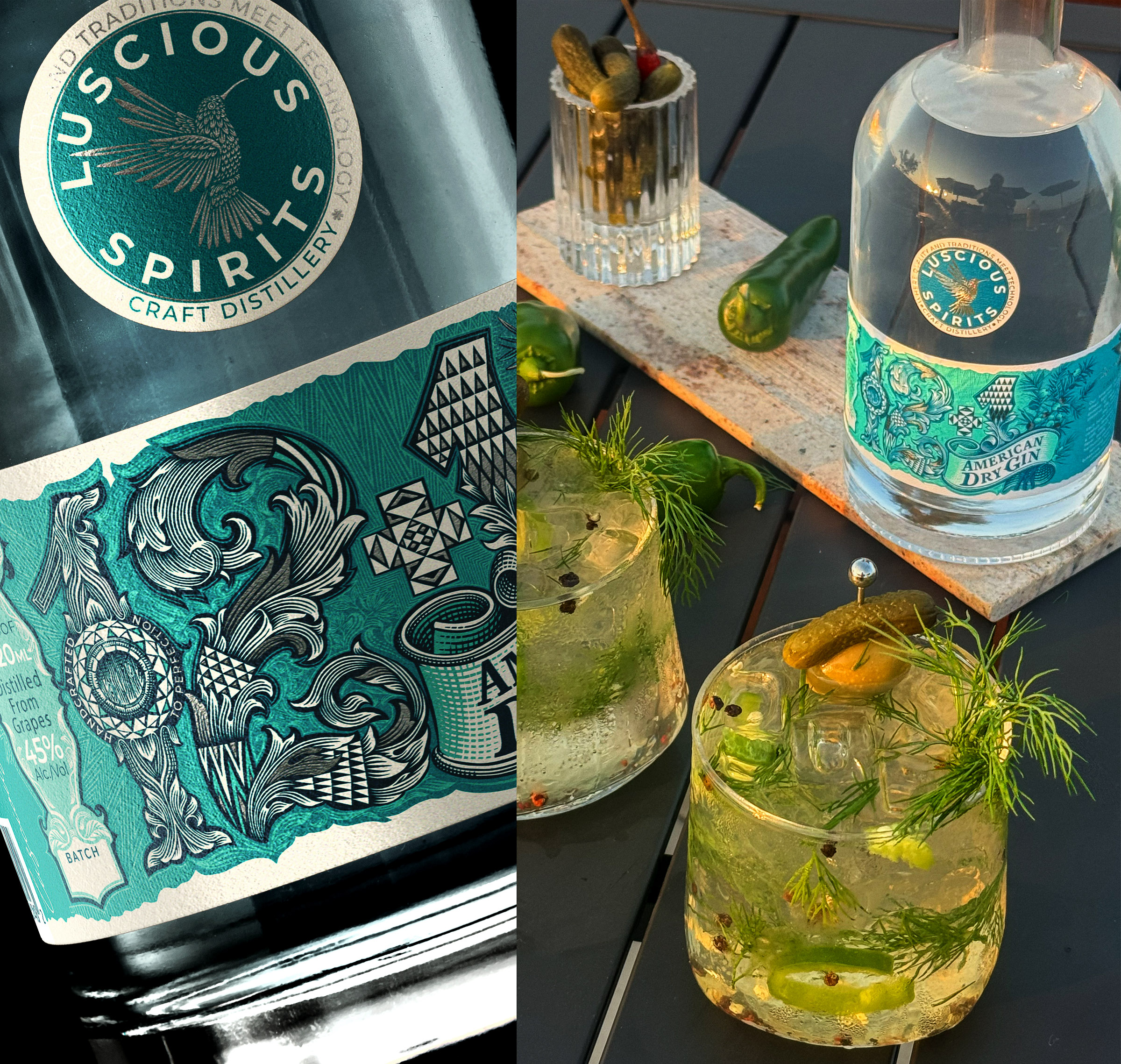
The focal point of the label is a large, hand-engraved stylized typography of “12+1”, rich with organic scrollwork, botanical flourishes, and subtle geometric patterns.
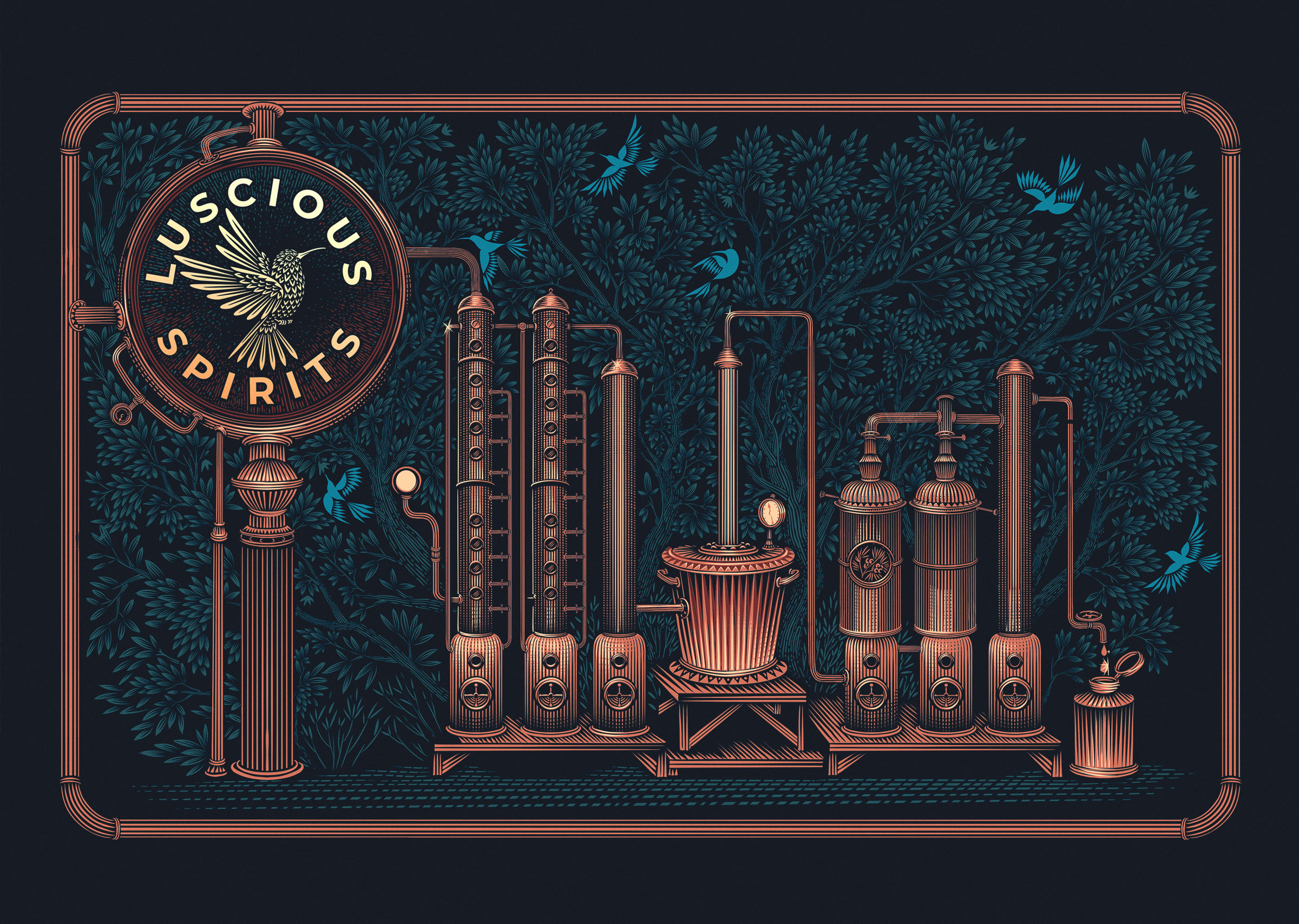
The Emblem: Situated prominently above the main label is a circular seal bearing the distillery’s emblem—a hummingbird surrounded by the ethos: “Where craft and traditions meet technology.”
Botanical Harmony: Intricate linework captures elements of juniper berries, flora, and traditional botanical ingredients distilled within the spirit.
Color Palette Strategy:
For the American Dry Gin, a sophisticated teal/turquoise-green hue anchors the graphics on a textured paper label, evoking a vintage apothecary feel.
For the Butterfly Blue Gin, deep cobalt and navy tones echo the natural hue imparted by the butterfly pea flower extract, creating a striking contrast against the bright blue spirit.
The Details
The execution relies heavily on tactile storytelling and premium print finishing:
Textured Stock: Printed on high-grade, tactile paper stock that gives a raw, craft feel under the fingertips.
Complex Engraving Style: Every loop, shading line, and leaf in the “12+1” motif is drawn with microscopic accuracy, reminiscent of classic currency or fine vintage stamps.
Clean & Modern Information Architecture: Side panels and subtle framing house crucial spirit metrics—90 Proof (45% ABV), 720 mL, and batch identifiers—without cluttering the central illustration.
Closure: Topped with a natural wooden cork closure, grounding the high-end glass bottle with an earthy, organic finish.
“Great packaging for craft spirits shouldn’t just tell you what’s inside the bottle—it should transport you into the artisan’s world before you even pop the cork. With ’12+1′, every line serves a purpose.”
— Yaroslav Shkriblyak
Curator’s Insight
The interesting move here is treating engraving density as the entire premium cue, rather than one ingredient among several. There’s no foil, no embossing mentioned, no structural bottle innovation. The weight comes purely from how much linework the eye has to resolve before it settles.
That density also does double duty as an authentication signal. Currency and old apothecary labels use fine engraving partly because it’s hard to fake, and craft spirits borrow that association whether or not counterfeiting is a real concern. The visual language says “this took skill to produce” before anyone reads a word.
Color is the only variable separating the two expressions, and it’s tied directly to content rather than arbitrary brand styling. Teal reads as classic and dry, cobalt reads as the actual tint the butterfly pea extract produces in the liquid. That’s a small discipline that keeps a highly ornamental system from feeling decorative for its own sake.
The wooden cork closure is worth noting too. Against that much fine linework, a raw material stopper resets the hand, giving the bottle one moment of unrefined texture before the eye returns to the label’s precision.
The transferable principle: extreme detail reads as craft only when it has a job to do beyond decoration, whether that job is signaling authenticity, encoding information, or reflecting what’s actually inside the bottle.



 agarcia studio
 Wynand88
 Eva Chistyakova
 Maria Bukhtilova
 estudiomarciano
 monther al omari
 Thirst
 Maruf Nishat
 Gray Matter Studio
 Julia Jay
 Modern Theory
 Furt Goods
 Fluid
Fluid alchimistestudioParis
 Ancora
 Mostafa Abdelmawla
 MewKittyDraw
 Studio Shala
 43oz
43oz Lucid mk2
 Atiq Alam
 IDEOLOGO
 Open Strategy & Design