

Mi Bella María & Mi Bella Matilda
Two loves, one valley, two bottles that speak for people
High in the Chilean Andes, there are two tiny wineries that never planned to become famous. They only wanted their grandfathers and grandmothers to keep living, at least inside glass.
Mi Bella María
Red, loud, laughing straight at you
In 1986, Don José planted a parcel of Pinot Noir and named it after his newborn daughter María: “Mi bella María”. Every year, he called her “little beauty”, even when she was already over thirty. In 202,2 María became the winemaker herself and bottled that parcel separately for the first time: 1,986 bottles.
The label is bright scarlet, like the dress she wore as a child running between the rows. Concentric circles ripple outward, as if her laughter is spreading across the bottle. The letters dance, family faces hide in the negative spaces, the paper is rough like Sunday empanada dough. You hold the bottle and hear María shouting across the years: “¡Ven, ven, it’s fun here!”
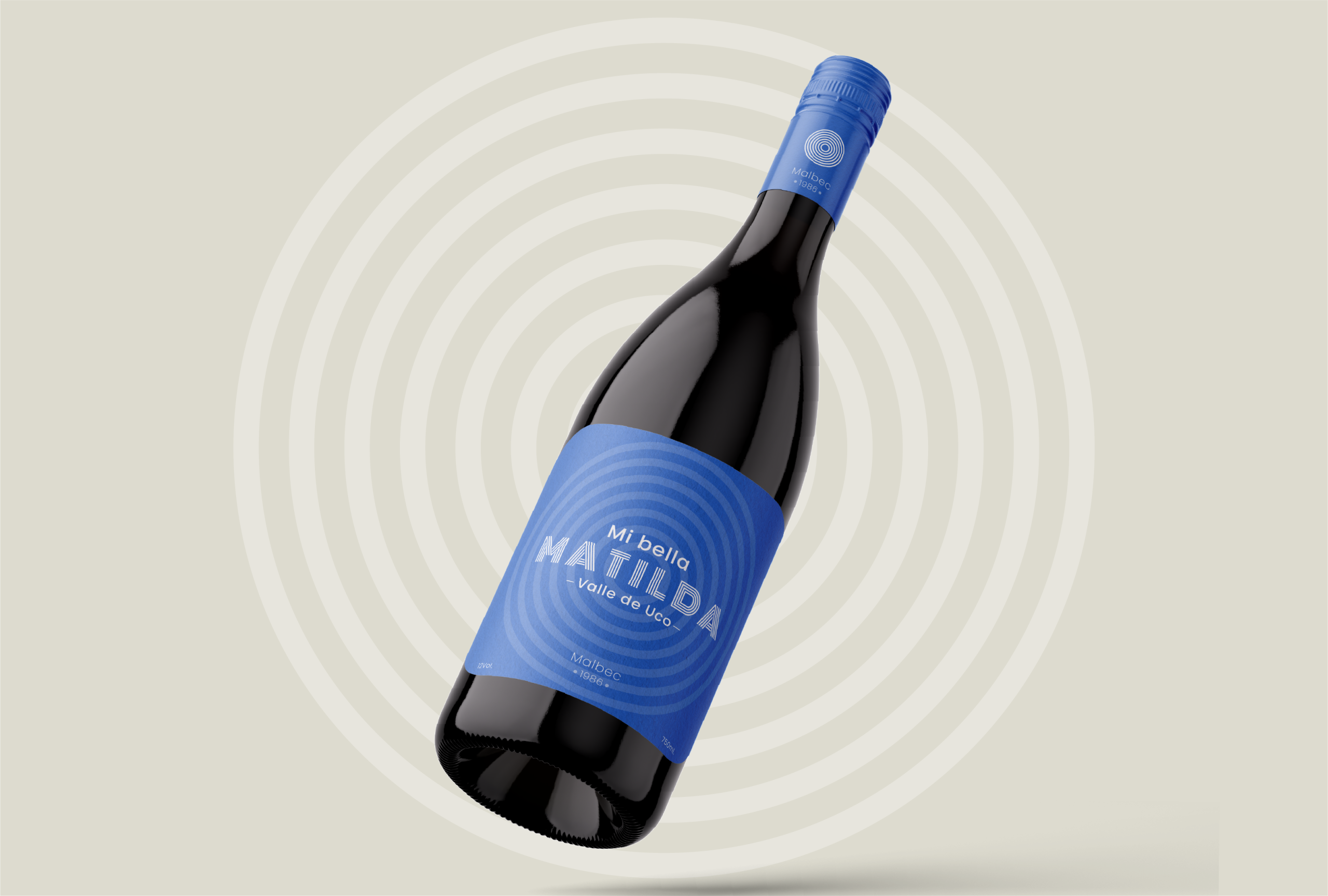
Mi Bella Matilda
Black, almost inaudible, yet impossible to let go
In 1959, Don Miguel planted the steepest slope with Carmenère and named it after the girl who left for Santiago and never came back. All his life, he spoke to the vines, calling them “Matilda”. In 202,3 his granddaughter, also named Matilda, bottled that slope alone: 1,959 bottles.
The label is deep night. The thinnest golden cracks form the silhouette of a girl in a 1950s dress, visible only under the right light and gone again in a second. The name is whispered, the year is blind-embossed so you feel it under your fingers. The wax capsule keeps Don Miguel’s fingerprint. You hold the bottle and hear a very old, very tender voice that is still waiting.
One bottle shouts about life.
The other whispers about a love that never managed to be spoken aloud.
Together they stand on shelves in Santiago, Tokyo, Oslo, New York: side by side, like two sisters that never were. People pick them up and can’t choose, because they suddenly understand:
This isn’t wine.
These are two women who have finally come home.

 NEV
NEV Stefano Bracci
 Alina
Alina monther al omari
 Lizakjx
 JOAOMARCOSDESIGN
 alchimistestudioParis
 Harriet Neild
 octavio rojo
 宏洛图品牌设计HONGLT
 DESIGN CONCEPTS
 Alexander Skurihin
 Studio K95
 ARMBRAND
 Richa Rai
 houseoferas by Miti
 Agence des Coteaux
 Kushi Eaknath
 Ann Treasa
 Xiao Ning
 krrrrrllii
 babyage
 Deep
Deep