
A great product label does two things. It captures attention and builds trust. Its design is clean and memorable. It communicates your brand’s core promise instantly. It also provides clear and necessary information. Consumers should find what they need without struggling. This is the foundation of effective packaging.
Today, those things are harder than ever to achieve. Global regulations demand more disclosure. Ingredient lists are longer. Safety warnings require more space. Your packaging’s size remains the same. This forces a difficult compromise. You must sacrifice design appeal for text density. Or you risk non-compliance by omitting crucial data. Both outcomes hurt your brand.
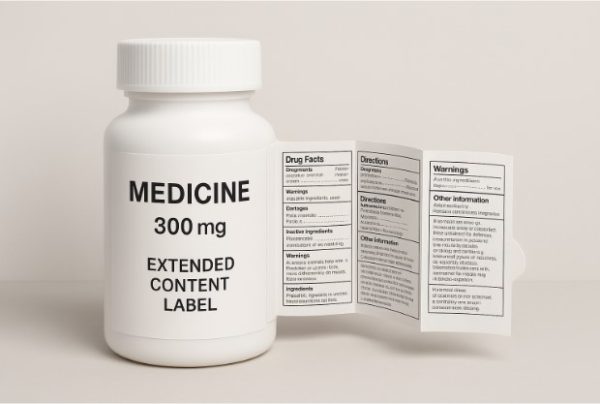
The solution lies in rethinking the label’s form. Smart packaging innovation addresses the problem. Extended content labels (ECLs) offer a practical solution. They preserve your primary design’s visual impact. Simultaneously, they grant the required space for all mandatory texts. These labels ensure compliance and shelf appeal.
The Regulatory Challenge: Why Traditional Labels Struggle
Think of your product’s label as a fixed canvas. Its size is permanent. Yet the amount of information you must legally fit onto it keeps growing. This is the core regulatory challenge. Traditional, flat labels simply lack the physical capacity to meet modern compliance demands without compromise. They were designed for a simpler time. Now, they are pushed to their limits, creating tangible risks for your brand.
The Space vs. Legibility Conflict
Regulations often specify minimum font sizes for critical information. They make ingredient lists or safety warnings more visible. Complying with these rules means other elements are squeezed on a crowded traditional label. The result? A cluttered and confusing label. It overwhelms the consumer and fails to communicate anything effectively.
The Multilingual Mandate
Selling products across borders means providing information in multiple languages. A traditional label might try to cram three languages into one tiny block of text. This creates a poor user experience. It increases the risk of misreading important instructions or warnings.
The Update Inefficiency
Regulations change. Formulas are tweaked. When you use a traditional label, any required text update means disregarding entire rolls of pre-printed packaging. This is wasteful and expensive.
Compromised Safety Warnings
When space is scarce, safety information can become condensed or placed in an inconspicuous area. This is a major liability. Consumers might miss critical warnings. Regulators view unclear hazard communication as a serious violation. They put your company at legal and financial risk.
Why ECLs Improve Regulatory Compliance
Traditional labels force a compromise between design and regulation. ECLs eliminate this. They provide a dedicated, organized space for mandatory information. This directly addresses the core challenges of modern compliance. By managing content effectively, ECLs turn regulatory hurdles into manageable tasks. They ensure clarity, accuracy, and accessibility for every requirement.
An ECL is a smart packaging solution that creates extra space without a larger container. It is not one single design. It is a family of labels with a common goal: to hide content until needed. This must be done while still maintaining your brand identity. The core idea is simple. Your primary label stays clean and engaging. Additional information lives on a separate, connected layer that the user can reveal.
These layers work in different ways. A booklet ECL is a multi-page label stitched together. A peel-and-reseal ECL has a hinged flap and closes. A wrap-around ECL extends from the front to the side or back of the container. The user peels, unfolds, or pulls a tab.
They Guarantee Legibility and Clarity
Regulations demand clear, readable text. Cramped labels often use tiny, unreadable fonts. ECLs solve this. They move dense information into a spacious secondary panel. This allows for legally compliant font sizes and improved organization. Consumers easily find and read warnings. Ingredients and instructions are more visible. This transparency builds trust and directly fulfills “clear and conspicuous” regulatory mandates, significantly reducing legal risk.
They Streamline Global Market Access
ECLs include multi-panel booklets that present full translations. This allows a single SKU to serve various markets. Inventory becomes simpler. There is no compliance risk of shipping English-only products to French-speaking regions. This streamlined approach cuts costs. It ensures you meet strict local language laws.
They Enable Agile Compliance Updates
Regulatory changes are constant. Updating a traditional label is slow and wasteful. ECLs offer a smarter model. The primary brand label remains unchanged. Only the compliant booklet inside requires revision. This allows for smaller, more frequent print runs of the compliance data. You adapt to new rules faster, with less cost and material waste, ensuring your products are always up-to-date and legally sound.
They Enhance Safety Communication
ECLs provide a designated area for safety data. This section can feature bold headers and structured instructions. It ensures warnings are impossible to miss before product use. This proactive communication helps prevent accidents. It also demonstrates due diligence to regulators, strengthening your defense in any product liability dispute.
They Simplify Audit and Verification
Regulatory audits require quick access to critical information. ECLs organize all compliance data in one logical, attached location. An auditor can easily review ingredients, safety protocols, and regional disclosures. There is no need to search for separate sheets or documentation. This organized system speeds up the audit process. It presents your brand as meticulous and fully in command of its regulatory obligations.
Best Practices for Designing ECLs for Compliance
A successful ECL implementation requires careful planning. Its design directly impacts compliance effectiveness. It also affects consumer behavior. In turn, it is influential of the overall perception of a product and brand.
Prioritize Intuitive Access: The opening mechanism must be immediately obvious to users. Incorporate clear instructional icons to guide interaction and prevent damage. Maintain a Logical Hierarchy: Structure your extended content with clear, bold headings for each section. This organization helps users find information quickly and demonstrates diligence to regulators. Use Durable Materials: Choose smudge-resistant coatings. Use tear-resistant substrates. This ensures all compliance information is legible throughout the product’s lifespan.
Validate Expanded Readability: Always check that font sizes meet regulatory minimums on every panel when fully expanded. Do not assume the primary label’s readability guarantees the same for expanded sections. Integrate Seamless Branding: Make ECL look like a native component of your primary package design. Consistent branding encourages interaction and reinforces the credibility of the information inside.
In Closing
ECLs provide a practical solution for stringent regulatory demands. They create the necessary space for compliance data while preserving the primary label design. It addresses legal requirements for clarity and accessibility. By implementing ECLs, businesses effectively manage regulatory obligations while maintaining brand presence.
 NEV
NEV Stefano Bracci
 Alina
Alina monther al omari
 Lizakjx
 JOAOMARCOSDESIGN
 alchimistestudioParis
 Harriet Neild
 octavio rojo
 宏洛图品牌设计HONGLT
 DESIGN CONCEPTS
 Alexander Skurihin
 Studio K95
 ARMBRAND
 Richa Rai
 houseoferas by Miti
 Agence des Coteaux
 Kushi Eaknath
 Ann Treasa
 Xiao Ning
 krrrrrllii
 babyage
 Deep
Deep